
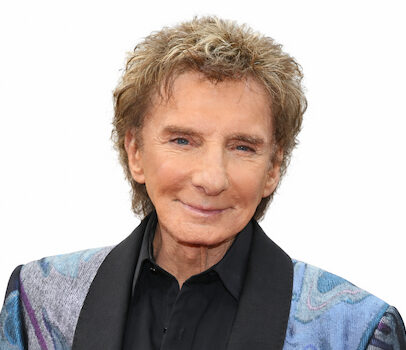
The Architecture of Melancholy and Joy: A Definitive Analysis of the Barry Manilow Legacy
The announcement on December 22, 2025, that Barry Manilow had been diagnosed with early-stage lung cancer served as a profound moment of reflection for the global entertainment community.
At 82 years of age, an age where most icons have long since retreated into the quietude of retirement, Manilow was still actively breaking records in Las Vegas and preparing for a new season of performances.
The diagnosis, discovered almost by happenstance following a persistent eleven-week battle with bronchitis, underscored the fragile intersection of human health and the relentless drive of a performer who has spent more than six decades in the spotlight.
This report examines the life and career of Barry Manilow, from his complex Brooklyn roots to his status as the “Showman of a Generation,” analyzing the medical, professional, and cultural facets that define his enduring impact on the American songbook.
The December 2025 Health Crisis: A Narrative of Early Detection
The timeline of Barry Manilow’s 2025 health news began not with a sudden collapse, but with the mundane frustrations of a respiratory infection.
Between October and December 2025, Manilow suffered through a six-week bout of bronchitis, followed by a relapse that lasted another five weeks.
Despite these challenges, his professional commitment remained unshaken; he completed a series of “Christmas Gift of Love” concerts at the McCallum Theatre in Palm Desert and returned to his residency at the Westgate Las Vegas. However, the persistence of the symptoms prompted his physician to order a precautionary MRI scan.
The results of that scan revealed a “cancerous spot” on his left lung. Representatives for the singer later confirmed the lesion was a stage-one tumor, a classification that significantly alters the prognosis toward recovery rather than palliation.
Manilow, maintaining the optimism that has characterized his public persona, described the early detection as a matter of “pure luck” and credited his medical team for their diligence.
This diagnosis led to the immediate postponement of his January 2026 concert dates across nine locations, including Florida, Georgia, and the Carolinas, as he prepared for surgery in late December 2025.
The medical strategy for Manilow’s recovery is notably conservative due to the early stage of the malignancy.
He informed his followers that he would not require chemotherapy or radiation, focusing instead on surgical removal followed by a month of rest—famously quipping that his recovery regimen would consist of “chicken soup and I Love Lucy reruns”.
This health event is a critical juncture in the 2025-2026 news cycle, highlighting the importance of preventative screening for long-term smokers and the elderly, while also demonstrating Manilow’s continued resilience as he plans a return to the stage by Valentine’s Day weekend in February 2026.
Health Event Timeline: 2025-2026 |
Date/Period | Details |
| Bronchitis Onset | Oct – Nov 2025 |
Initial six-week infection |
| Relapse | Nov – Dec 2025 |
Secondary five-week infection period |
| MRI Diagnosis | Dec 22, 2025 |
Detection of stage-one cancerous spot on left lung |
| Surgical Intervention | Late Dec 2025 |
Scheduled surgery to remove the malignant spot |
| Recovery Phase | Jan 2026 |
One month of mandated rest; no chemo/radiation |
| Anticipated Return | Feb 12, 2026 |
Residency resumption at Westgate Las Vegas |
The Brooklyn Crucible: Names, Identity, and Early Influences
To understand the longevity of Barry Manilow, one must examine the complex socio-cultural environment of his upbringing in Williamsburg, Brooklyn.
Born Barry Alan Pincus on June 17, 1943, his early life was defined by shifting identities and a lack of paternal stability.
His mother, Edna Manilow, was of Russian-Jewish descent, and his father, Harold Kelliher, was an Irish truck driver.
The intersection of these backgrounds was fraught with tension; Edna’s parents, Esther and Joe Manilow, were reportedly upset by the match, leading to a significant compromise before the wedding.
Edna convinced Harold to change his surname to Pincus—a Jewish name from her own family tree—to appease her parents and maintain social appearances.
This naming saga would repeat throughout Barry’s youth. After Harold Kelliher (then Pincus) was drafted and the couple divorced, Barry was raised primarily by his maternal grandparents and his mother in a Williamsburg apartment.
The environment was musically vibrant but economically modest. Just weeks before his Bar Mitzvah, at the urging of his grandfather, Barry Pincus legally adopted his mother’s maiden name, becoming Barry Manilow.
This transition was more than a legal formality; it was a reclamation of the Jewish heritage that would provide the emotional and melodic foundation for his future compositions.
The introduction of William “Willie” Murphy, Edna’s second husband and another Irish truck driver, provided the musical “gold” that would define Manilow’s career.
Despite initial resistance from the Manilow grandparents, Willie became a central figure in Barry’s life, introducing him to a sophisticated library of jazz, Broadway scores, and the vocal stylings of Frank Sinatra and Duke Ellington.
This exposure to high-level arrangement and vocal phrasing—contrasted with the accordion lessons Barry had taken since age seven—shifted his trajectory toward professional musicianship.
Manilow’s education at the New York College of Music and the Juilliard School was funded by his work in the CBS mailroom, a humble start for a man who would eventually sell over 85 million records.
The Jingle King: Psychological Hooks and the 30-Second Hit
Before he was a pop icon, Barry Manilow was the most successful anonymous songwriter in America. In the 1960s and early 70s, he dominated the New York commercial jingle circuit, a discipline that required extreme melodic efficiency.
His work for major corporations like McDonald’s, State Farm, and Band-Aid created the “soundtrack of a generation” in a way that radio hits could not, as these themes were played repeatedly across every television market in the country.
Manilow has frequently stated that his years in the jingle industry were his most important training, teaching him how to condense a narrative and an emotional hook into a mere thirty seconds.
For the State Farm jingle (“Like a good neighbor, State Farm is there”), he was paid a flat fee of $500 with no residuals—a transaction that, while profitable at the time, represents one of the greatest bargains in advertising history given the theme’s decades-long use.
His “You Deserve a Break Today” theme for McDonald’s and the “Stuck on Band-Aid” jingle further showcased his ability to craft relatable, comforting melodies that resonated with the middle-class American psyche.
In 2009, his contributions were recognized with an Honorary Clio Award, validating the technical skill required to move the needle of American consumerism through song.
| Iconic Commercial Jingles | Brand/Corporation | Manilow’s Role |
| “Like a good neighbor…” | State Farm |
Composer/Singer |
| “I am stuck on Band-Aid…” | Band-Aid |
Composer/Singer |
| “You deserve a break today” | McDonald’s |
Singer |
| “All across the nation…” | Pepsi |
Singer |
| “Grab a bucket of chicken” | KFC |
Singer |
| “Be a Pepper” | Dr. Pepper |
Singer |
The Continental Baths: Resilience in the Subterranean Stage
The most culturally significant period of Manilow’s early career took place in the basement of the Ansonia Hotel at the Continental Baths.
This gay bathhouse, which operated as a “hedonistic palace” during the early years of the gay liberation movement, served as an unlikely incubator for mainstream talent.
Manilow was hired as the house pianist for $75 a night, eventually partnering with a young Bette Midler.
The performances at the Continental Baths were legendary for their intimacy and their transgression of social norms. Midler, who became known as “Bathhouse Betty,” performed to crowds of men often wearing nothing but towels.
Manilow, as her musical director and arranger, was responsible for the lush, cabaret-style arrangements that elevated the act from a novelty to a national phenomenon.
He often performed in a towel himself to blend in with the patrons, a gesture of solidarity that endeared him to the LGBTQ+ community long before he was publicly open about his own sexuality.
This era was transformative for Manilow’s professional ethics. He learned how to handle a “great audience” that was both discerning and demanding, and his collaboration with Midler led to his production of her debut album, The Divine Miss M (1972).
While he was instrumental in Midler’s rise to superstardom, his own debut album for Bell Records initially failed to gain traction.
However, the resilience he developed on the subterranean stages of New York prepared him for the critical “whipping boy” status he would face once his solo career finally ignited.10
The “Mandy” Transformation: From Songwriter to Superstar
The trajectory of Barry Manilow’s career was irrevocably altered in 1974 with the release of the single “Mandy”.
Originally written as “Brandy” by Scott English, the song had been a minor hit in the UK but failed to resonate in the US.
Under the guidance of Clive Davis at Arista Records, Manilow re-titled the song to avoid confusion with the Looking Glass hit “Brandy (You’re a Fine Girl)” and transformed it from a mid-tempo rock track into a soaring, dramatic power ballad.
“Mandy” became the cornerstone of the Manilow brand: the “vulnerable showman”. It reached number one on the Billboard Hot 100 in early 1975, marking the first of 51 Top 40 singles.
This success launched an era of commercial dominance that saw Manilow release a string of hits including “I Write the Songs,” “Looks Like We Made It,” “Can’t Smile Without You,” and “Could It Be Magic”.
His style, often described by critics as “saccharine” or “borderline schmaltzy,” was in reality a calculated use of pre-rock pop sensibilities and Broadway-style orchestrations.
The success of “Mandy” earned Manilow his first million dollars in royalties, but it also made him a target for the rock-centric music press of the 1970s.
Critics dismissed his work as “sentimental junk,” often failing to recognize the sophisticated musical arrangements and the emotional resonance his music held for millions of listeners.
This disconnect between critical reception and public adoration birthed the “Fanilow” movement—a devoted, near-religious fan base that would sustain his career for the next fifty years.
Copacabana and the Disco Pivot: A Theatrical Anomaly
In 1978, Manilow released “Copacabana (At the Copa),” a song that initially appeared to be a departure from his signature ballads.
Influenced by the burgeoning disco movement, the track was a narrative tour de force about a showgirl named Lola and a tragic love triangle at a Havana-style nightclub.
Manilow and his co-writers initially viewed the song as a “novelty cut” and were surprised when it became one of his most enduring hits.
“Copacabana” highlighted Manilow’s skill as a theatrical composer. It earned him a Grammy for Best Male Pop Vocal Performance and eventually spawned a television movie and a full-scale stage musical that toured the world.
The song’s legacy is a testament to Manilow’s ability to bridge the gap between pop music and musical theater, a feat that few of his contemporaries could replicate.
It remains a staple of his live shows, often performed with elaborate choreography and a mezzanine catwalk that allows him to sing “like an angel from above” over his audience.
| Chart Success: Key Singles | Peak Chart Position | Certification |
| “Mandy” (1974) | #1 Billboard Hot 100 |
Gold |
| “I Write the Songs” (1975) | #1 Billboard Hot 100 |
Gold |
| “Looks Like We Made It” (1977) | #1 Billboard Hot 100 |
Gold |
| “Copacabana” (1978) | #8 Billboard Hot 100 |
Gold |
| “Can’t Smile Without You” (1978) | #3 Billboard Hot 100 |
Gold |
| “Could It Be Magic” (1975) | #6 Billboard Hot 100 |
Gold |
The Mature Artist: Jazz, Standards, and the Mercer Collection
By the mid-1980s, Manilow sought to distance himself from the pressures of the pop charts and return to his jazz and Broadway roots.
In 1984, he released 2:00 AM Paradise Cafe, a groundbreaking album recorded in a single take that featured jazz legends such as Sarah Vaughan and Mel Tormé.
The project was a critical success, demonstrating a technical depth and vocal control that his earlier pop hits had sometimes obscured.
One of the most significant achievements of his later career was his collaboration with the estate of the legendary lyricist Johnny Mercer.
Manilow was granted access to a collection of Mercer’s unpublished lyrics, to which he composed new music.
This work, along with his “Greatest Songs” series—which interpreted hits from the 1950s, 60s, and 70s—re-established him as the pre-eminent interpreter of the Great American Songbook.
In 2002, he was inducted into the Songwriters Hall of Fame alongside Michael Jackson and Sting, a final validation of his status as a master craftsman of song.
The Business of Being Barry: Net Worth and Real Estate
Barry Manilow’s financial success is as consistent as his chart success. As of 2026, his net worth is estimated at $100 million, a figure derived from his massive record sales, publishing rights, and highly lucrative performance contracts.
Unlike many stars of his era who suffered from poor management, Manilow took early control of his business affairs through Stiletto Entertainment, managed by his husband Garry Kief.
His real estate dealings reflect his affinity for coastal and desert living. He has owned multiple properties in Malibu, including a villa sold for $5.45 million in 2012.
In Las Vegas, he has owned luxury condominiums at the Park Towers complex to facilitate his long-term residencies.
His current residence in Palm Springs has become a sanctuary during his recent health battles, providing the privacy and space necessary for his recovery from lung surgery.
| Financial and Asset Overview (2026) | Estimated Value | Context |
| Estimated Net Worth | $100 Million |
Combined assets and sales |
| Global Record Sales | 85+ Million |
Solo artist benchmark |
| Malibu Real Estate Sales | $5.45 Million |
2012 villa sale |
| Las Vegas Residency Value | $60 Million/Year |
Historical Hilton contract peak |
| State Farm Jingle Fee | $500 |
1960s flat fee (no residuals) |
The Las Vegas Legacy: Surpassing Elvis
The defining chapter of Manilow’s later career is his residency in Las Vegas. Starting with a landmark $60 million deal at the Las Vegas Hilton in 2004, he transformed the “residency” model from a retirement gig into a vital, record-breaking enterprise.
In 2023, he achieved a historic milestone by surpassing Elvis Presley’s record of 636 performances at the International Theater at the Westgate Resort and Casino.
This achievement is more than just a numbers game; it represents a fundamental shift in the economics of live performance for legacy artists. By “setting up shop” in one location, Manilow avoided the physical strain of touring while maintaining a “lifetime residency” that consistently sells out.
His shows in Vegas are known for their high production value, including a Mezannine catwalk and a setlist that traverses his entire sixty-year career.
Even at 82, and facing a lung cancer diagnosis, he has extended his Westgate performances through 2026, signaling that his “last concerts” are far from over.
Personal Identity: Authenticity and the Garry Kief Partnership
For decades, Barry Manilow’s personal life was the subject of intense tabloid speculation, yet he remained a fiercely private figure.
His early marriage to high school sweetheart Susan Deixler (1964–1966) was short-lived; Manilow later admitted he was “just not ready for marriage” at age 20 and was focused on making music in Greenwich Village.
It wasn’t until 2017 that he publicly confirmed he was gay, a revelation that came decades after he met his manager and life partner, Garry Kief.
Manilow and Kief met in 1978 and have been together for nearly fifty years. They married in 2014 in a private ceremony in Palm Springs after same-sex marriage was legalized in California.
Barry Manilow expressed that his reluctance to come out earlier was rooted in a fear of disappointing his fans, many of whom had seen him as a romantic idol.
However, the reaction was “so beautiful,” with the “Fanilows” overwhelmingly supporting his right to happiness.
Though he has no biological children, Manilow is a dedicated stepfather to Kief’s daughter, Kirsten, whom he helped raise from the age of one.
He has spoken eloquently about the role of a stepfather, citing his own relationship with Willie Murphy as a blueprint.
In 2023, Kirsten adopted a baby girl, making Manilow a grandfather—a role he described as a “brand-new experience” that he is thoroughly enjoying at age 80.
Barry Manilow by the Numbers (2025-2026)
| Category | Detail |
| Current Age | 82 (Born June 17, 1943) |
| Net Worth | Estimated $100 Million |
| Zodiac Sign | Gemini |
| Marital Status | Married to Garry Kief (since 2014) |
| Records Sold | Over 85 Million worldwide |
The Health Struggle: Smoking, AFib, and the 2025 Diagnosis
Manilow’s current battle with lung cancer is the latest in a long history of health challenges.
He has been candid about his history as a heavy smoker, revealing that he started at age nine and eventually smoked three packs of non-filtered cigarettes a day.
Though he quit for twenty years, he admitted to a relapse in Las Vegas before switching to electronic smoking devices.
This habit, combined with persistent bronchial issues, likely exacerbated the conditions that led to his 2025 cancer diagnosis.
In addition to respiratory issues, Manilow has managed atrial fibrillation (AFib) for over three decades.
Barry Manilow described the condition as feeling like a “fish flopping around” in his chest and has been a vocal advocate for heart health awareness.
His resilience in the face of these conditions is a recurring theme in his career; he famously underwent emergency oral surgery in 2016 only to return to his “One Last Time” tour days later.
His approach to the 2025 diagnosis—postponing shows but immediately setting a return date—continues this pattern of prioritizing his audience and his craft over his personal ailments.
Philanthropy and the Manilow Music Project
One of the most profound aspects of Manilow’s legacy is his commitment to music education.
In response to severe budget cuts in public schools, he founded the Manilow Music Project (MMP) in 2008.
The project has donated over $10 million in instruments and scholarships to underfunded music programs across the US.
Manilow’s motivation for the project is deeply personal; he credits his own high school orchestra class in Brooklyn—at a school once ranked as the most dangerous in America—for molding him into the musician he became.
His philanthropy often takes the form of instrument drives in cities where he performs, and he frequently honors music teachers with significant grants.
By ensuring that “disadvantaged young people” have the opportunity to experience creativity through music, he is effectively paying forward the gift that Willie Murphy gave him with that “stack of gold” records in the 1950s.
Critical Reception and Cultural Impact: Re-evaluating the Showman
The critical narrative surrounding Barry Manilow has shifted significantly in the 21st century. While he was once a “whipping boy” for a male-dominated rock press, modern musicology has begun to appreciate the technical brilliance of his arrangements and the courage of his “earnest, unapologetically emotional music”.
In a culture often obsessed with “coolness,” Manilow’s willingness to be “schmaltzy” or “corny” is increasingly viewed as a form of emotional authenticity.
His impact on the “Adult Contemporary” genre is unparalleled, as he is ranked as the top artist of all time in that category by both Billboard and Radio & Records magazines.
His ability to sustain a career for sixty years, sell out arenas, and break records in Las Vegas places him in a rare tier of performers like Frank Sinatra and Elton John.
As he navigates his 2025-2026 health recovery, the world isn’t just watching a singer fight cancer; it is watching a master architect of American pop culture preserve a legacy that has made “the whole world sing”.
| Career Statistics Summary | Figures/Details |
| Worldwide Record Sales |
85,000,000+ |
| Top 40 Singles |
51 |
| Number One Hits |
13 |
| Platinum Albums |
13 |
| Multi-Platinum Albums |
6 |
| Las Vegas Performance Record |
636+ (Surpassed Elvis) |
| Philanthropic Donations |
$10,000,000+ |
Conclusion: The Path Through 2026
The recovery of Barry Manilow from his 2025 lung cancer surgery is not just a personal health matter but a cultural milestone for the “Fanilow” community.
By catching the malignancy at stage one, Manilow has positioned himself for a return to the stage that will likely be met with unprecedented emotional intensity.
His story remains one of profound resilience—of a Brooklyn boy named Barry Pincus who changed his name, his sound, and his life to become a global icon, all while maintaining a quiet, stable partnership that has outlasted nearly all of his contemporaries.
As February 2026 approaches, the lights of the Westgate International Theater await the return of a man who, despite every health challenge and critical dismissal, continues to prove that “it’s magic” whenever he sits down at the piano.
Legacy and The Road Ahead
Despite his recent lung cancer news, 2026 looks bright for Manilow. He is scheduled to return to his residency at the Westgate Las Vegas on Valentine’s Day weekend. His influence stretches beyond the charts; he’s a Grammy, Tony, and Emmy winner who has bridged the gap between Broadway and Pop.
Did Barry Manilow smoke? Yes, Barry was a heavy smoker for about 30 years, starting at age nine. While he eventually quit, he has been open about the struggle, which likely contributed to his current health journey.
“I’m counting the days until I return to my home away from home… something tells me that February weekend is going to be one big party!” — Barry Manilow, December 2025.
What’s Next?
-
February 2026: Resumed Vegas Residency.
-
Spring 2026: Rescheduled “Last Concerts” tour dates.
-
Ongoing: Continued work with the Manilow Music Project, providing instruments to school music programs.
Are you a “Fanilow”? Share your favorite Barry memory or song in the comments below!
Sources:
-
Sky News: Barry Manilow reveals lung cancer diagnosis (Dec 2025)
-
Associated Press: Health update and tour rescheduling (Dec 2025)
-
Celebrity Net Worth: Barry Manilow financial profile 2025
-
Official Barry Manilow Website: Biography and Tour Dates

Leave a Reply