
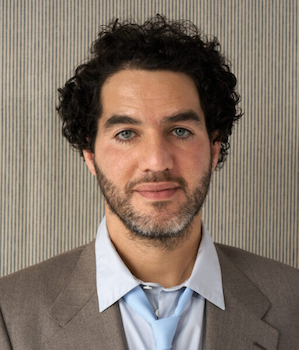
Benny Safdie: The Solo Ascent of the Accidental Auteur
I. The Cinematic Collision: From Anxiety to Autonomy (The Hook and Recent Triumph)
Benjamin “Benny” Safdie, born February 24, 1986 1, has spent nearly two decades defining a certain, relentless brand of American independent cinema alongside his older brother, Josh.
The signature Safdie style—a chaotic, neon-drenched fever dream of perpetual anxiety—culminated in the massive critical and commercial success of the 2019 crime thriller Uncut Gems.2
For years, his public identity was tethered to this fraternal partnership, an inseparable image of gritty, kinetic filmmaking.
Yet, Safdie, who is currently 39 years old 1, has successfully executed one of the most compelling career pivots in contemporary Hollywood.
His profile shifted dramatically, moving from a director who often cast non-professional actors to a trusted collaborator of the industry’s biggest names.
His ultimate confirmation as a singular, powerful force came in 2025 when he won the Silver Lion at the 82nd Venice International Film Festival for his solo directorial debut, The Smashing Machine.1
The Smashing Machine represented a colossal leap in scope and scale. It is a gritty, unflinching biographical drama focusing on MMA fighter Mark Kerr and his struggles with addiction.4
The project’s central paradox was Benny Safdie’s ability to direct Dwayne “The Rock” Johnson, a global icon of commercial cinema, and completely transform him.6 Johnson, known for his polished, blockbuster persona, was depicted with a raw, almost “stock VHS” aesthetic.7
The success achieved at Venice confirmed that Safdie could handle a major star and a substantial budget without compromising the fierce artistic integrity established in his earlier, lower-budget works.
This success, coupled with a flurry of high-profile acting roles—from Christopher Nolan’s massive historical epic Oppenheimer to co-creating the complex satirical series The Curse—established Benny Safdie as a true cinematic polymath.1
The question that defines his current trajectory is this: How did the co-creator of claustrophobic, frenetic New York thrillers successfully transition into a reliable character actor for major studio pictures and an international auteur who commands respect on the global festival circuit?
The move positions the end of the directorial collaboration with his brother not as a professional stumbling block, but as a necessary and ambitious choice for creative expansion.8
II. The Urban Tapestry: Upbringing and the Birth of Cinematic Anxiety
To understand the core tension and frantic energy of Safdie’s early work, one must look closely at his formative years in New York City. Benny Safdie and his brother Josh grew up as the children of Amy and Alberto Safdie.3
Their childhood was marked by their parents’ divorce, forcing them into a constant shuttle between two dramatically different environments: their father’s home in Queens and their mother and stepfather’s home in Manhattan.3
This instability, this constant movement between worlds, became a foundational theme in their later films, which are often defined by characters who are rootless and perpetually moving under pressure.
The Roots of Authenticity and Heritage
The Safdie brothers are Jewish, and their heritage provided a rich cultural backdrop for their storytelling.3 Their father, Alberto Safdie, was born in Italy and raised in France and is of Syrian Jewish and Sephardic-Jewish descent. Their mother is of Russian-Jewish descent.9
This familial connection to international and trade-based communities, especially the Syrian Jewish community in New York, proved crucial for creating the deeply authentic, high-stakes world of the Diamond District featured in Uncut Gems.10
This background, combined with a shared passion for New York Knicks basketball, created a unique lens through which they viewed the city—a place of high ambition, cultural friction, and desperate struggle.3
Education and Early Cinematic Compulsion
Safdie received his early education at Columbia Grammar & Preparatory School in Manhattan before graduating with a Bachelor of Science from the Boston University College of Communication.1
Crucially, the impulse to record and create came from their father, Alberto, who was a devoted film enthusiast and amateur filmmaker.3
The father’s influence extended beyond encouragement; he famously used scenes from the film Kramer vs. Kramer to help explain his ongoing divorce from their mother, further ingraining a generational blurring of the lines between cinematic fantasy and reality.11
This tension—between gritty documentary-style realism and heightened narrative storytelling—is a hallmark of their work.
Defining the Safdie Style
The collaborative films of the Safdie brothers developed a signature aesthetic that has been widely analyzed as the visual representation of psychological stress. This style is not merely visual flair; it is a carefully calibrated technique designed to immerse the viewer in the character’s anxiety.
Elements of the Safdie Aesthetic:
- Kinetic Editing and Anxiety: The films rely heavily on rapid-fire, quick-cuts, and fast action designed to ramp up suspense and energy.12 This editing often results in a “jarring feeling” for the audience, forcing them into the same perpetual, anxious state as the central character.12 This translates the instability of their divided childhood into a visceral, shared audience experience.
- Vibrant, Juxtaposed Color Palettes: The brothers frequently employ bold, vibrant colors, drawing comparisons to contemporaries like Harmony Korine or Nicolas Winding Refn.12 These bright shades are often dramatically placed against the “dark, gritty shades of New York,” creating a sense of chaotic commotion that defines the urban landscape.12
- Streetcasting and Authenticity: Beginning with films like Heaven Knows What (2014), the brothers demonstrated a commitment to using non-professional actors or “quasi-vérité” versions of themselves, a practice known as streetcasting.11 This approach heightens the raw, authentic feeling, shining a light on parts of New York not typically seen in glossy studio productions.14
- The Unsung Collaborator: A major element of this signature style is the involvement of Ronald Bronstein, who has served as co-writer and editor for all of their narrative features since Daddy Longlegs (2009).3 Bronstein’s long-term partnership with the brothers confirms that their aesthetic is built on a consistent, tightly-knit creative unit, not just the two siblings.
The intense nature of their collaboration often bled into their creative process. The brothers were open about the tension inherent in working so closely, acknowledging that “Fighting is a huge part of collaboration,” and that this dynamic somehow made their crew “weirdly comfortable”.14
This suggests that the high-tension conflict inherent in their working relationship was necessary fuel for the intense, anxious films they created, providing context for why their eventual separation was not a sign of failure, but a search for different, perhaps less conflict-driven, creative expression.
The Safdie Brothers’ Collaborative Signature
| Film | Signature Style Elements | Core Themes | Critical/Box Office Note |
| Heaven Knows What (2014) | Street casting, handheld intensity, neon lighting. | Addiction, isolation, radical authenticity. | Breakthrough using non-professional actors.13 |
| Good Time (2017) | Kinetic editing, vibrant blue/red palette, relentless pace. | Desperate fraternity, urban anti-heroism. | Cannes nomination; established the “anxiety-thriller” brand.2 |
| Uncut Gems (2019) | Orchestral chaos, claustrophobic camera work, aggressive sound design. | Addiction, toxic ambition, gambling spiral. | Biggest commercial hit ($50M BO); career-defining role for Sandler.16 |
III. The Collaborative Peak: Good Time and Uncut Gems
The period spanning 2017 to 2019 marked the high point of the collaborative Safdie brand, cementing their reputation for crafting films that felt like panic attacks captured on celluloid.
Good Time: The Director as Lead Actor
The genesis of Good Time (2017) was remarkable: actor Robert Pattinson, deeply impressed by Heaven Knows What, sought out the Safdies to work on a project.13 The brothers temporarily tabled their long-developing Diamond District script (Uncut Gems) to strike while Pattinson was available.
The result was Good Time, an adrenaline-fueled chase thriller. Benny Safdie took on a crucial role in front of the camera, playing Nick Nikas, the intellectually disabled brother of Pattinson’s character, Connie. For his performance, Safdie was nominated for the Independent Spirit Award for Best Supporting Male.1
Benny’s commitment to the role involved deep, immersive method preparation with Pattinson. The two worked at a car wash to develop the desperate, fraternal rapport necessary for the film’s central dynamic.17 This intense experience, acting within his own demanding, fast-paced directorial environment, proved invaluable.
It provided him with critical experience in delivering high-level, complex performances under pressure. This validation as a skilled actor laid the foundation for his ability to successfully pivot into an acting career years later.
Uncut Gems: Validation and Industry Leverage
Following Good Time, the Safdies returned to their passion project, Uncut Gems (2019). Starring Adam Sandler as the charismatic but self-destructive gem dealer Howard Ratner, the film became their biggest commercial success to date, grossing an impressive $50 million worldwide.16
The film solidified their brand of “anxiety in cinematic form”.18 Uncut Gems was chaotic, aggressive, and emotionally exhausting, demanding a profound level of audience engagement. Its success validated their hyper-niche genre, providing the brothers with significant industry leverage and, critically, the financial freedom necessary for future endeavors.19
Furthermore, the film’s triumphant reception, driven partly by Adam Sandler’s career-redefining performance, created a bond of trust that would become a key asset for Benny Safdie later.
The relationship established during this high-stakes production immediately translated into a significant role in Sandler’s high-profile sequel, Happy Gilmore 2, showcasing a clear pattern of leveraging art-house success to gain access to mainstream projects.20
IV. The Art of the Breakup: Finding Freedom Post-Gems
Following the triumph of Uncut Gems, the filmmaking world waited for the Safdie Brothers’ next collaborative masterpiece. However, the anticipated reunion never materialized. The brothers have not directed a feature film together since 2019.2
The Quest for Autonomy
The separation was not born of animosity, but of a mutual need for creative exploration. Benny Safdie was explicit in framing the separation as a desire for autonomy, moving away from the “falling out” narrative that often accompanies such professional splits. He characterized the choice as “a natural progression of what we each want to explore”.8
After reaching the peak of their collaborative ambition with Uncut Gems, they found themselves asking, “What now?”.2 This sense of creative saturation led to the realization of individual interests: “Then it was like, ‘I’m interested in this,’ and, ‘I’m interested in this,’ and then you want to figure that out”.2
Benny described the move as a return to their earlier days, when they occasionally worked on projects independently, characterizing the decision as the “next logical step” and a “continuation of a process,” rather than a break.2
The Professional Divergence
The brothers’ paths diverged sharply. Josh Safdie turned his focus to the sports drama Marty Supreme, while Benny committed fully to The Smashing Machine.2
By choosing to direct, write, and produce The Smashing Machine completely solo, Benny Safdie accepted maximum professional risk while maximizing potential credit.2
Separating from a built-in safety net and a long-standing creative partner required immense personal stability. While his films often focus on characters driven to chaos and instability, Benny Safdie has maintained a stable personal life.
He has been married to Ava Rawski since 2013, and the couple shares two children.1 This foundation likely provided the emotional and mental space required to navigate the complex, high-pressure transition to being a self-reliant auteur. His decisive solo move, cemented by the recognition at Venice, confirmed his identity as a complete, singular talent.
V. The Surfer Logic: Hollywood’s Most Interesting Character Actor
In the years immediately following Uncut Gems, Benny Safdie’s acting career exploded, moving beyond the roles he played in his own films. This ascent was characterized by a deliberate strategy he described as “surfer logic”: grabbing promising opportunities, or waves, as they appeared.21
Before 2020, Safdie had only appeared in one non-Safdie feature, Person to Person.21 Post-Uncut Gems, his portfolio rapidly swelled, demonstrating remarkable range and, perhaps more importantly, a keen ability to choose projects that elevated his profile and credibility.
Mentorship from Auteur Giants
Safdie’s acting strategy was highly effective because he leveraged his art-house pedigree to secure roles with cinematic masters, essentially engaging in an exchange of trust.
- Paul Thomas Anderson (Licorice Pizza, 2021): Safdie played the compassionate Joel Wachs.1 This role showed a surprising emotional warmth and restraint, a deliberate departure from the volatile intensity of characters in his directorial work.
- Christopher Nolan (Oppenheimer, 2023): Safdie secured a major role as the brilliant, yet calculating, physicist Edward Teller, often cited as “the father of the hydrogen bomb”.1 This performance required a deep commitment to historical drama and intellectual intensity, validating his capacity to handle large-scale, prestige narratives.
By actively working with directors like Nolan and Anderson, Safdie implicitly endorsed their work while simultaneously having them legitimize his acting chops. This strategy fast-tracked his acceptance into the industry’s elite, providing a foundation of authority that few filmmakers turned actors achieve so quickly.
His commitment to separating his acting work from his directorial persona is also notable. For smaller roles, such as Nari in the Disney+ miniseries Obi-Wan Kenobi 1, Safdie opted to do “no press”.21
The Range Test and Versatility
Safdie demonstrated his range across various genres, proving he was not restricted to his signature indie style.
He starred in the romantic thriller Stars at Noon (2022) and the acclaimed adaptation of the Judy Blume novel, Are You There God? It’s Me, Margaret (2023).1
These varied roles confirmed his versatility and reliability as a character actor capable of disappearing into different cinematic worlds.5
VI. The Perfect Dirtbag: Co-Creating and Starring in The Curse
While Safdie’s acting career flourished under other directors, his co-creation of the satirical Showtime series The Curse (2023–24) alongside Nathan Fielder became the thematic bridge between his collaborative past and his solo future. In this complex, genre-bending hybrid, Safdie showcased his abilities as a writer, director, and lead actor.1
The Curse is a “wacky and punishingly uncomfortable indictment of colonization and greed”.22 The series follows a couple (Emma Stone and Nathan Fielder) attempting to launch an HGTV show about eco-friendly homes in New Mexico, only to become entangled in moral dilemmas and a supposed curse.
The Vicious Dougie Schecter
Benny Safdie played Dougie Schecter, the amoral, manipulative producer of the couple’s show.23 Dougie is the quintessential Safdie character: a “deliciously unlikable dirtbag” with a tragic backstory who exploits real-life situations for television.22 He is portrayed as vicious, yet endowed with a “sad sense of humanity” in his darkest moments.22
His performance as Dougie is thematically layered. By playing a character who exploits real people and difficult situations for profit, Safdie engages in a form of self-referential critique.
His earlier works sometimes skirted the line between gritty realism and potential exploitation, particularly with street-casting in films like Heaven Knows What.13
Playing Dougie allows him to satirize the exact moral dangers inherent in cinematic hyper-realism and the “performative white allyship” often tackled in the show.24
The Curse also demanded his technical prowess behind the camera. Safdie was deeply involved in the writing and editing of the series, ensuring the specific, unnerving tone was maintained over the entire run.5
This success in portraying intensely unpleasant, yet strangely compelling characters, established Dougie as a new archetype in his portfolio. This expertise was immediately utilized when Adam Sandler came calling for the sequel to his 1996 golf comedy.
VII. Future Velocity: From IMAX Epics to Nostalgic IP
Benny Safdie’s upcoming slate demonstrates an unprecedented reach across the entire industry spectrum, from $250 million IMAX epics to nostalgic, family-friendly animation. This breadth confirms that his brand has completely decoupled from his earlier indie limitations.
The Auteur’s Blockbuster Balance
The director’s immediate future is defined by a rigorous balancing act between uncompromising art-house vision and massive studio projects. This ability to move between worlds ensures both long-term career resilience and artistic freedom, a trajectory often seen in elite directors like Denis Villeneuve.
1. Nolan’s Next Epic: The Odyssey (2026)
Safdie is set to reunite with Christopher Nolan in 2026 for The Odyssey, a massive adaptation of Homer’s foundational saga.25
The film is scheduled for release on July 17, 2026, and is set to utilize IMAX film formats.25 Safdie described his experience filming the epic as “incredible,” confirming his successful integration into the A-list production world.26
This is a fascinating full-circle moment, given that Good Time was once described as “a scumbag’s heist movie version of ‘The Odyssey'”.13
Safdie is now contributing to the literal Hollywood rendition of the story that thematically inspired his earlier work.
2. The Comedy Villain: Happy Gilmore 2 (2025)
Thanks to the bond formed during Uncut Gems, Adam Sandler personally offered Safdie the role of the main antagonist in the long-awaited sequel, Happy Gilmore 2.20 Safdie plays Frank Manatee, the owner of a rival golf league who goes up against Happy.23
Safdie “instantly” accepted the role, leveraging his newly recognized talent for playing high-functioning “loathsome characters” for high-visibility mainstream exposure.20
3. The Voice Actor Crossover: The Super Mario Galaxy Movie
Perhaps the most surprising entry on his upcoming resume is his role as a voice actor. Safdie is confirmed to voice Bowser Jr. in The Super Mario Galaxy Movie.1 This signifies the total expansion of Benny’s brand.
His willingness to take on roles in family-friendly IP, a genre seemingly antithetical to the chaos of Uncut Gems, demonstrates that he is now recognized as a reliable and recognizable commodity across the entire industry spectrum, not just the independent film world.
VIII. Legacy, Financial Gravity, and The Polymath’s Future (Conclusion)
Benny Safdie’s career trajectory is a study in creative metabolism: channeling relentless New York energy into focused, intense cinematic experiences, and then deliberately breaking away from a successful partnership to achieve artistic autonomy.
The analysis confirms that his estimated net worth, reported at an impressive $12 million as of 2024 29, is a direct reflection of his success in blending “artistic integrity with commercial viability”.29
This financial stability provides him with the crucial luxury of maintaining independent creative control, allowing him to oscillate between personal projects like The Smashing Machine and high-level acting gigs with Nolan and Sandler.
Safdie’s lasting impact rests on his unique ability to inject raw, human flaw and emotional depth into every character he creates or portrays, whether he is documenting the gritty realism of Mark Kerr’s addiction 30 or the detached intellect of Edward Teller.
He transformed from one half of a highly specialized directorial partnership into a complete cinematic polymath—a writer, director, editor, and character actor—who carries the signature of New York’s nervous energy into every project, regardless of the scale.
The future of Benny Safdie as a solo auteur remains the most fascinating prospect. Having proven his ability to handle commercial constraints and A-list stars while maintaining critical prestige (the Silver Lion), the question is whether his success will pull him primarily toward larger-scale prestige biopics and auteur blockbusters, or if he will reserve energy for the intensely personal, low-budget anxiety thrillers that first defined his voice.
Benny Safdie’s Evolving Career Trajectory (2019–2026)
| Career Phase | Defining Role/Project | Domain | Achievement/Impact |
| Collaborative Peak (2019) | Uncut Gems (Co-Director/Writer) | Filmmaking | Box Office success; defined cinematic anxiety.16 |
| Character Actor Ascent (2021-2023) | Oppenheimer (Edward Teller) & Licorice Pizza (Joel Wachs) | Acting | Demonstrated dramatic range; built trust with major auteurs.1 |
| Prestige TV Auteur (2023–2024) | The Curse (Co-Creator/Actor) | Television/Writing | Critical success; mastered uncomfortable satire over long form.22 |
| Solo Director Debut (2025) | The Smashing Machine (Director/Writer/Editor) | Filmmaking | Venice Silver Lion; established solo prestige brand.1 |
| Blockbuster Crossover (2025-2026) | Happy Gilmore 2 / The Odyssey | Acting/Voice Acting | Transition into major franchise and epic scale projects.1 |
Benny Safdie: Quick Profile & Future Outlook
| Category | Detail | Impact on Career |
| Full Name | Benjamin Safdie | |
| Born/Age | February 24, 1986 (Age 39) | Consistent productivity across two decades. |
| Ethnicity | Jewish-American | Influences the rich cultural texture of his films. |
| Spouse/Family | Ava Rawski Safdie (m. 2013), 2 children | Grounds him amidst his career’s chaotic energy. |
| Education | Boston University (BS) | Early interest in physics informing his structural/visual work. |
| Key Films (Directing) | Good Time, Uncut Gems, The Smashing Machine (Solo) | Established his intense, signature aesthetic. |
| Key Films (Acting) | Oppenheimer, Happy Gilmore 2, The Curse | Showcases his remarkable versatility and range. |
| Upcoming Role | Bowser Jr. in The Super Mario Galaxy Movie (2026) | The ultimate pivot to mainstream pop culture. |
| Legacy Prediction | Will be viewed as an auteur who successfully crossed over, not just into acting, but into a director capable of handling massive biographical scopes. |
Sources List
- 1 Wikipedia: Benny Safdie
- 3 Wikipedia: Safdie brothers
- 3 Wikipedia: Safdie brothers (Early life)
- 9 Wikipedia: Josh Safdie
- 18 Reddit: Good Time vs Uncut Gems
- 12 Premium Beat: Kinetic Filmmaking Energy Safdie Brothers
- 1 Wikipedia: Benny Safdie (Awards and solo career)
- 15 Reddit: Josh and Benny Safdie IAmA
- 13 Music Box Theatre: Good Time Interview
- 22 IGN: The Curse review
- 24 Inverse: The Curse review
- 14 Industrial Scripts: Safdie Brothers Quotes
- 21 Collider: Benny Safdie Films
- 1 Wikipedia: Benny Safdie (Solo career path and upcoming films)
- 4 Hunger Mag: The Safdie Brothers are Going Solo
- 8 Reddit: The Safdie Brothers Have Split
- 2 Slashfilm: Why Safdie brothers Split Up
- 17 Glide Magazine: Good Time Interview
- 10 Little White Lies: The Safdie Brothers Uncut Gems
- 27 People: Super Mario Galaxy Movie Trailer
- 28 Just Jared: The Super Mario Galaxy Movie Trailer
- 23 Screen Rant: Benny Safdie Happy Gilmore 2
- 20 TIME: Happy Gilmore 2 Benny Safdie Interview
- 26 Bleeding Cool: The Odyssey Benny Safdie Says It Was An Incredible Experience
- 25 Wikipedia: The Odyssey (2026 film)
- 29 HotNewHipHop: Benny Safdie Net Worth
- 19 Reddit: Benny Safdie Financial Success
- 16 Reddit: Uncut Gems box office
- 7 The Eagle Online: Review The Smashing Machine
- 30 Reddit: Benny Safdie’s The Smashing Machine Review
- 6 Vogue Scandinavia: The Smashing Machine Director Benny Safdie Interview
- 5 YouTube: Benny Safdie The Filmmakers Podcast
- 11 YouTube: Josh and Benny Safdie Biography
- 12 Premium Beat: Cinematic Energy (Korine comparison)
- 2 Slashfilm: Benny Safdie quote on natural progression
- 14 Industrial Scripts: Josh and Benny Safdie working together anecdotes and quotes

Leave a Reply