
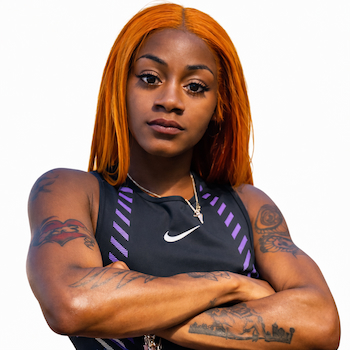
From Controversy to Comeback: How Sha’Carri Richardson Became Track’s Most Resilient Champion
The Breaking Point That Changed Everything
Olympic track star Sha’Carri Richardson was arrested last week for super speeding and has since entered a not guilty plea, driving 104 mph on Florida’s State Road 429. But this recent headline barely scratches the surface of a career defined by spectacular comebacks from devastating setbacks.
At just 25 years old, Richardson has transformed from a banned Olympic hopeful into a world champion worth an estimated $3-4 million, with a groundbreaking $20 million Nike deal through 2028. Her journey reveals a blueprint for turning public failure into redemption—one that any ambitious professional can learn from.
The arrest comes amid a season where Richardson has faced multiple challenges, including a February 2025 injury that delayed her competitive start and an alleged domestic violence incident in July 2025 that led to her withdrawal from the 100m at the USA Track & Field Championships. Yet Richardson’s ability to navigate controversy while maintaining elite performance makes her story worth studying.
The Redemption Formula: How She Rebuilt Her Brand After Tokyo
When Sha’Carri Richardson tested positive for THC in July 2021—just weeks after qualifying for the Tokyo Olympics with a blazing 10.86-second 100m at the U.S. trials—her Olympic dreams evaporated instantly. The 30-day suspension kept her off the Olympic team entirely. Most athletes would have crumbled. Richardson doubled down.
The Strategy:
Rather than disappearing, Richardson owned her mistake publicly. She revealed she’d used cannabis while grieving her biological mother’s death, demonstrating vulnerability that humanized her to millions. This authenticity became her superpower. On Instagram, where she boasts over 4 million followers, Richardson transformed from athlete to cultural icon, advocating for LGBTQ+ rights and showing her vibrant personality through her signature orange hair, long nails, and unapologetic style inspired by track legend Florence Griffith-Joyner.
The Metrics of Comeback:
- 2021: Banned from Tokyo Olympics, world ranking plummeted
- 2023: Won 100m gold at World Championships in Budapest with championship record 10.65 seconds
- 2024: Earned Olympic silver (100m) and gold (4x100m relay) at Paris Olympics, netting approximately $72,500 in prize money
- 2025: Net worth climbed to $3-4 million with endorsements from Nike, Sprite, Beats by Dre, Powerade, and SKIMS
Lessons for the Reader:
- Own your setbacks publicly: Richardson’s transparency about her struggles created deeper fan loyalty than perfection ever could
- Use adversity as content: Every comeback story became marketing gold for her personal brand
- Diversify income streams early: Her annual track earnings ($45,000-$50,000) pale compared to her endorsement empire
- Authenticity attracts partnerships: Brands didn’t want a perfect athlete—they wanted someone real
The Performance Optimization System: Breaking Records Through Reinvention
Sha’Carri Richardson’s 100m personal best of 10.65 seconds makes her the fifth-fastest woman in history. Her 100m time ranges consistently between 10.65-10.87 seconds in major competitions. But what separates Richardson isn’t just her natural speed—it’s her methodical approach to peak performance timing.
The Training Philosophy:
Under coach Dennis Mitchell, a former Olympic sprinter, Richardson learned to treat her season like a strategic campaign rather than a sprint. After her disappointing ninth-place finish at the 2025 Prefontaine Classic in Eugene (where training partner Melissa Jefferson-Wooden won), Richardson didn’t panic. She acknowledged the February injury setback and focused on being ready for what matters most: the World Championships.
“I’m definitely grateful for the long season,” Richardson stated in July 2025. “I know it’s going to give me time to be ready when it all counts—and the only thing that matters is World Championships.”
Data Points of Excellence:
- 10.75 seconds at age 19 (2019 NCAA Championships) – became one of ten fastest women in history
- 10.72 seconds (April 2021) – sixth-fastest woman of all time at that moment
- 10.65 seconds (August 2023) – World Championship gold and fifth-fastest all-time
- 9.65-second split in 4x100m relay (2023 World Championships) – fastest relay split in history
- Paris 2024: 10.87 seconds for Olympic silver, then anchored 4x100m relay from fourth to first for gold
Lessons for the Reader:
- Strategic periodization wins: Richardson doesn’t peak for every race—she peaks for championships
- Learn from losses quickly: Her ninth-place finish didn’t derail her season; she used it as data
- Surround yourself with competitors: Training alongside Jefferson-Wooden and Twanisha Terry elevates everyone’s performance
- Timing matters more than frequency: One championship gold outweighs ten regular season wins
The Brand-Building Blueprint: From Track Star to Cultural Icon
Sha’Carri Richardson’s net worth tells a story of strategic personal branding. While elite track athletes typically struggle financially, Richardson built a multimedia empire.
The Differentiation Strategy:
Richardson recognized early that being fast wasn’t enough. In a sport dominated by Caribbean sprinters like Jamaica’s Shelly-Ann Fraser-Pryce, Richardson needed a unique identity. She found it in fearless self-expression: bright hair colors (orange became her signature), elaborately decorated long nails during races, bold makeup, and outspoken interviews where she declared “I’m not back, I’m better.”
Revenue Breakdown:
- Track earnings: $45,000-$50,000 annually from competitions
- Paris 2024 Olympics: $72,500 (gold 4x100m: $37,500 + split bonus $12,500; silver 100m: $22,500)
- Nike contract: Reportedly $20 million over five years (2024-2028)
- Additional endorsements: Sprite (first female athlete endorsed), Powerade, Beats by Dre, SKIMS x Nike collaboration, Olay, Dannon, Mielle Organics
The Instagram Strategy:
With 4 million Instagram followers, Richardson monetizes attention through sponsored content while maintaining authenticity. She shares glimpses of her personal life (like National Girlfriend’s Day posts hinting at her mystery partner) balanced with professional highlights. This keeps fans invested in her journey beyond race results.
Lessons for the Reader:
- Differentiation creates value: In any competitive field, standing out matters as much as standing first
- Personal brand compounds: Richardson’s personality makes her more marketable than faster, less charismatic runners
- First-mover advantage: Being Sprite’s first female athlete endorser created unique positioning
- Multiple revenue streams protect against single-point failure: When track earnings stagnate, endorsements provide stability
- Social media is your owned platform: 4 million followers means direct access to your audience without intermediaries
The Resilience Framework: Navigating Public Scrutiny and Personal Struggles
Beyond the medals and money, Richardson’s most valuable skill might be psychological resilience. Raised by her grandmother Betty Harp and an aunt in Dallas after her biological parents weren’t present, Richardson learned early to fight for everything. But turning personal pain into competitive fuel requires specific strategies.
Crisis Navigation Pattern:
- 2021 Tokyo ban: Publicly explained cannabis use was grief coping, accepted responsibility, stayed visible
- 2022 failure: Didn’t even qualify for World Championships at U.S. trials – called a “shock” by major media
- 2023 redemption: Won World Championship gold, proving doubters wrong
- 2024 Olympics: Finished second in individual 100m but delivered legendary 4x100m anchor, passing two runners in dramatic comeback for gold
- 2025 challenges: February injury, July domestic violence arrest, another arrest in January 2026 for speeding – yet continues competing
The Mental Game: Richardson’s mantra “I’m not back, I’m better” isn’t just bravado—it’s a cognitive reframe that transforms setbacks into setup for greater achievement. When she ran the Olympic 4x100m relay anchor leg, receiving the baton in fourth place, she didn’t just catch up—she turned her head to stare down competitors before crossing the finish line in one of the Games’ most iconic moments. That swagger under pressure comes from having survived worse.
Lessons for the Reader:
- Develop a comeback narrative: Every setback becomes part of your origin story if you frame it right
- Public vulnerability builds loyalty: Richardson’s openness about grief and mistakes created deeper connections
- Pressure-test your resilience: Championship moments reveal whether you’ve truly learned from failures
- Separate identity from results: Richardson’s confidence exists independent of any single race outcome
- Advocate for causes bigger than yourself: Her LGBTQ+ advocacy creates purpose beyond personal achievement
The Height and Personal Details That Humanize a Champion
Standing at a compact and powerful frame optimized for explosive sprinting, Sha’Carri Richardson’s height and physical attributes are perfectly suited for the 100m and 200m distances. Born March 25, 2000, in Dallas, Texas, she’s just 25 years old with potentially a decade of elite competition ahead.
Personal Life Insights:
Richardson is openly bisexual and has been a vocal LGBTQ+ advocate since coming out publicly in 2015. She had a high-profile relationship with Jamaican hurdler Janeek Brown from 2019-2022 that ended amid abuse allegations from both sides.
Since 2024, Richardson has kept her romantic life more private, though she’s hinted at having a partner through social media posts. There have been persistent rumors about a relationship with fellow U.S. sprinter Christian Coleman, particularly after they appeared together at the 2024 Paris Olympics men’s basketball final, though neither has confirmed this publicly.
Richardson’s openness about her sexuality and her willingness to discuss mental health challenges make her a role model for young athletes navigating identity and ambition. Her close relationship with her grandmother, whom she calls her “foundation,” grounds her despite global fame.
The Resilience Factor: From “What Happened?” to “What’s Next?”
Many fans still ask, “What happened with Sha’Carri Richardson?” regarding her 2021 Olympic absence. The answer is a 5-year arc of redemption. She went from being the girl who “missed her chance” to the woman who anchored the USA 4x100m relay to Gold in 2024.
Her 2025 season was “average” by her standards—finishing 5th in the Tokyo World Championships—but her 2026 “reset” is focused on the 2028 LA Olympics.
Lessons for the Reader
-
Play the Long Game: One bad season (2025) doesn’t erase a career of excellence.
-
Anchor the Team: Even if you don’t win the “Individual” gold (she took Silver in the 100m), being a “Relay Hero” solidifies your value.
-
Ignore the “Noise”: Richardson has faced intense scrutiny regarding her parents (raised by grandmother Betty Harp) and her personal life. She remains focused on the “finish line.”
-
Adapt to Age: At 25 years old, she is entering her prime athletic years while gaining “veteran” wisdom.
-
Redefining Success: Success isn’t just the 10.65 time; it’s the ability to keep showing up after the world counts you out.
Richardson vs. Industry Standards: A Comparative Analysis
| Metric | Sha’Carri Richardson | Industry Standard (Elite Female Sprinters) |
|---|---|---|
| Personal Best (100m) | 10.65 seconds | Top 10: 10.49-10.70 seconds |
| Net Worth | $3-4 million (age 25) | $1-5 million (varies widely) |
| Social Media Following | 4 million Instagram | 500K-2 million typical |
| Endorsement Deal Value | $20 million/5 years (Nike) | $500K-$5 million annually |
| Brand Partnerships | 7+ major brands | 2-4 brands typical |
| Career Recovery Time After Ban | 2 years to world championship | Most never recover |
| Olympic Medals | 1 gold, 1 silver | Varies; many retire with 0-1 |
| World Championship Medals | 3 (2 gold, 1 bronze) | 0-2 for most athletes |
What This Reveals:
Richardson isn’t just competing at an elite level—she’s rewritten the economics of track and field for female athletes. Her ability to monetize personality and performance creates a new template for the sport.
The Road Ahead: Defending Her Crown
As Richardson faces the 2025 season with injury setbacks and off-track controversies, she’s demonstrated that her greatest strength isn’t avoiding adversity—it’s using it as fuel. The question isn’t whether she’ll face more challenges, but how she’ll leverage them for her next comeback.
With the World Championships approaching and her stated focus on being “ready when it all counts,” Richardson exemplifies a crucial truth: success isn’t about perfect execution. It’s about perfect recovery.
Is Sha’Carri Richardson the fastest woman in the world?
On any given day, she’s certainly in the conversation. Who is the fastest woman in the world alive? While Florence Griffith-Joyner’s 35-year-old record of 10.49 seconds still stands as the fastest ever, among active athletes, Richardson’s 10.65 seconds puts her in the top tier alongside Jamaica’s Shericka Jackson and Olympic champion Julien Alfred. Has Sha’Carri Richardson won an Olympic medal? Yes—silver in the 100m and gold in the 4x100m relay at the Paris 2024 Olympics.
What happened with Sha’Carri Richardson?
In February 2026, she was arrested for driving 104 mph in a 65 mph zone in Florida under the state’s “super speeder” law, pleading not guilty. This follows a challenging 2025 that included a February injury, a July domestic violence arrest, and an inconsistent competitive season. Yet her career arc suggests these setbacks will become footnotes in a larger redemption narrative.
How fast is Sha’Carri in mph?
Her 10.65-second 100m translates to approximately 21.03 mph at peak velocity, though average speed over the full distance is around 20.68 mph—nearly superhuman by any standard.
The lessons from Richardson’s journey extend far beyond track and field. She’s proven that authenticity can be monetized, failure can be weaponized, and resilience can be systematized. Whether you’re building a startup, recovering from career setbacks, or trying to differentiate in a competitive field, her blueprint offers actionable wisdom: own your story, build your brand, surround yourself with competitors who push you, and never let a single failure define your trajectory.
Forward-Looking Summary: The 2026-2028 Outlook
As Sha’Carri Richardson navigates her recent legal hurdles in Florida and prepares for the 2026 outdoor season, her “Blueprint” remains clear: Speed is non-negotiable, but Authenticity is the real currency. She has proven that you can be “arrested for super speeding” one week and be the “Fastest Woman in the World” the next. Her journey teaches us that the world will forgive your speed as long as you remain honest about your steering.
Final Takeaways for the Reader:
-
Don’t Fear the Outside Lane: You don’t need the “perfect” conditions to win.
-
Turn Your Scars into Your Brand: Her 2021 suspension is now her most powerful story of resilience.
-
Speed Needs a Support System: From Coach Dennis Mitchell to her grandmother, her “foundation” allows her to run fast.
-
Stay “Human” in a Digital World: In the age of AI and curated feeds, Sha’Carri’s raw humanity is her greatest competitive advantage.
Sources
- WESH Orlando – “Olympic track star arrested in Orange County for ‘super speeding'” (February 4, 2026)
- Olympics.com – “Athletics: Sha’carri Richardson reveals injury, eyes 100m title defense at 2025 Prefontaine Classic” (July 5, 2025)
- Team USA – “Sha’Carri Richardson Profile”
- Celebrity Net Worth – “Sha’carri Richardson Net Worth”
- World Athletics – “Sha’Carri Richardson Profile”
- Wikipedia – “Sha’Carri Richardson”
- Britannica – “Sha’Carri Richardson Biography”
- NBC Olympics – “Sha’Carri Richardson career timeline”

Leave a Reply