
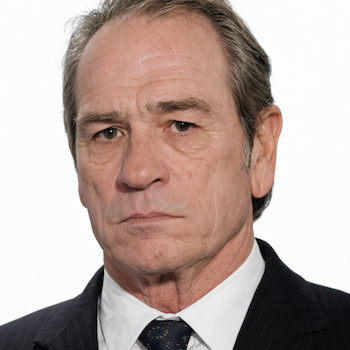
The Texan Polymath: A Comprehensive Media Analysis of the Life and Legacy of Tommy Lee Jones
The history of late-twentieth and early-twenty-first-century American cinema is inextricably linked to the weathered, impassive countenance of Tommy Lee Jones.
Born on September 15, 1946, in the small town of San Saba, Texas, Jones has cultivated a professional identity that represents a rare confluence of high-brow intellectualism and rural ruggedness.
As an actor, his “dryly taciturn” delivery and “flinty inscrutability” have defined the archetype of the modern lawman and the existential cowboy.
As a director, he has utilized his Harvard-educated background to explore the “mechanics of faith” and the “borders between the heart and the mind”.
However, the narrative of his life reached a somber and deeply personal inflection point on New Year’s Day, 2026, when the public record was forced to reconcile the enduring legacy of a Hollywood icon with the tragic and untimely loss of his youngest daughter, Victoria Kafka Jones.
This analysis seeks to provide an exhaustive examination of the career, personal philosophy, and socio-economic standing of Tommy Lee Jones.
By navigating the complexities of his upbringing in the Texas oil fields, his transformative years at Harvard University, and his ascent to the pinnacle of the film industry, a picture emerges of a man who is as much a scholar of Flannery O’Connor as he is a “maritime cowboy”.
The report further details the financial architecture of his career, his notorious professional friction with figures such as Jim Carrey, and the factual corrections regarding long-standing health rumors that have occasionally obscured his public profile.
The Crucible of San Saba and the Texas Oil Fields
To understand the stoic persona that Jones brings to the screen, one must look to the volatility of his formative years in West Texas.
His father, Clyde C. Jones, was a man whose life was dictated by the harsh rhythms of the oil industry and the physical demands of cowboy labor.
His mother, Lucille Marie Scott, was equally industrious, maintaining roles as a police officer, a school teacher, and a beauty shop owner.
The household was characterized by a specific brand of Southern resilience, but it was also fractured; his parents were married and divorced twice, creating a transient and sometimes unstable domestic environment.
Jones has been candid in later reflections about the challenges of his youth, disclosing that he endured significant physical abuse at the hands of his father.
This early exposure to trauma and the rugged landscape of Midland and San Saba likely instilled in him the adaptability and resilience that would later characterize his cinematic roles.
When his father moved to North Africa to continue working in the oil fields, a young Tommy Lee remained in Texas, leveraging his physical prowess and academic focus to secure a scholarship to the St. Mark’s School of Texas in Dallas.
This transition from the oil fields to an elite boarding school represented the first of many dichotomies in his life, placing him in a world of privilege and rigorous discipline that would serve as the foundation for his Ivy League trajectory.
| Developmental Milestone | Location/Context | Key Influence |
| Birth and Early Infancy | San Saba, Texas |
Rugged rural environment; ranching culture. |
| Primary Education | Midland, Texas |
Oil field community; early labor experience. |
| Secondary Education | St. Mark’s School of Texas |
Academic scholarship; elite discipline. |
| Formative Work | Texas/North Africa |
Working oil fields during school vacations. |
| Collegiate Entry | Harvard University |
Need-based scholarship; athletics and theater. |
The Harvard Intellectual and the 1968 Football Legend
The transition to Harvard University in 1965 was a transformative period for Jones, where his dual interests in athletics and literature began to merge.
Majoring in English literature, he became a dedicated pupil of dramatist Robert Chapman and developed an intellectual affinity for the works of Flannery O’Connor.
His senior thesis, focused on the “mechanics of Catholicism” in O’Connor’s prose, provides a critical window into his later directorial philosophy, which often investigates the interplay between religious faith and the gritty reality of human existence.
While his intellectual life was flourishing, his athletic career was becoming legendary. Playing guard for the Harvard Crimson from 1965 to 1968, Jones was a first-team All-Ivy League selection and a key member of the undefeated 1968 team.
This season culminated in the famous “29-29” tie against Yale, an event so culturally significant it was later the subject of a documentary in which Jones reflected on the “most famous football game in Ivy League history”.
His social life at Harvard was similarly high-profile, if retrospectively so. He was roommates with future Vice President Al Gore and Bob Somerby, who would later become a prominent media critic.
The bond between Jones and Gore was forged through shared interests in music and the shared experience of navigating the social pressures of the late 1960s.
Interestingly, the character of Oliver in the novel and film Love Story was partially based on aspects of both Jones and Gore, according to author Erich Segal, who knew them during a sabbatical at Harvard.
Roommate Dynamics and Collegiate Culture
The anecdotes from this period highlight a contrast between Jones’s burgeoning intensity and Gore’s more conventional, if occasionally “dorky,” collegiate persona.
They formed a country music band together, a venture that Jones later admitted was primarily motivated by a desire to “chase skirts”.
These years were not merely about social status; for Jones, who attended on need-based aid, they were years of intense labor and ambition, setting him apart from the more established wealth of his peers.
The Evolution of an Authoritative Screen Presence
Upon graduating cum laude in 1969, Jones bypassed the traditional corporate or academic paths available to a Harvard graduate, moving instead to New York City to pursue acting.
His professional debut was remarkably swift; within ten days of arriving in the city, he landed a role in the Broadway production A Patriot for Me.
His film debut followed shortly after in Love Story (1970), where he played a Harvard student—a role that required little imaginative stretch but provided a significant entry point into the industry.
The Soap Opera Years and the 1980s Breakthrough
The 1970s were a period of steady professional development, though not yet stardom. From 1971 to 1975, Jones played Dr. Mark Toland on the soap opera One Life to Live, a role that exposed him to the relentless pace of television production and helped him hone his on-screen presence.
His transition to more substantial film roles began in the mid-1970s after a move to Los Angeles, where his “no-nonsense mannerisms” and distinctive facial structure often led to him being cast as unsettling characters or villains in films like Jackson County Jail (1976) and Eyes of Laura Mars (1978).
The 1980s marked the true arrival of Tommy Lee Jones as a powerhouse performer. His portrayal of country singer Loretta Lynn’s husband in Coal Miner’s Daughter (1980) earned him critical acclaim and his first Golden Globe nomination.
This performance was followed by an Emmy-winning turn as the convicted murderer Gary Gilmore in The Executioner’s Song (1982), a role that showcased his ability to inhabit characters defined by internal turmoil and moral ambiguity.
| Year | Accolade/Award | Project | Result |
| 1981 | Golden Globe – Best Actor | Coal Miner’s Daughter |
Nominated |
| 1983 | Primetime Emmy – Lead Actor | The Executioner’s Song |
Won |
| 1989 | Primetime Emmy – Lead Actor | Lonesome Dove |
Nominated |
| 1990 | Golden Globe – Supporting Actor | Lonesome Dove |
Nominated |
| 1992 | Academy Award – Supporting Actor | JFK |
Nominated |
| 1994 | Academy Award – Supporting Actor | The Fugitive |
Won |
| 1994 | Golden Globe – Supporting Actor | The Fugitive |
Won |
| 2005 | Cannes Film Festival – Best Actor | The Three Burials… |
Won |
| 2013 | Screen Actors Guild – Supporting Actor | Lincoln |
Won |
The 1990s: Iconography and Global Success
The decade of the 1990s saw Jones become one of the most recognizable and bankable stars in Hollywood.
This ascent was anchored by his role as U.S. Marshal Samuel Gerard in The Fugitive (1993), for which he won both the Academy Award and the Golden Globe for Best Supporting Actor.
His portrayal of Gerard—a man driven by duty and a complete lack of sentimentality—became an iconic template for the modern law enforcement official.
This period was also marked by a diversification of roles that demonstrated his versatility:
-
JFK (1991): As Clay Shaw, a Louisiana businessman suspected in the Kennedy assassination, Jones received his second Oscar nomination, portraying a figure of sophisticated, albeit suspicious, authority.
-
Natural Born Killers (1994): He played a “hyperbolically nasty” prison warden, showcasing a willingness to embrace darker, more satirical material.
-
Batman Forever (1995): Taking on the role of Harvey Dent/Two-Face, Jones entered the realm of high-budget comic book adaptations, though the production was famously marred by his interpersonal friction with co-star Jim Carrey.
-
Men in Black (1997): As Agent K, Jones provided the deadpan anchor to Will Smith’s energetic performance, creating one of the most successful cinematic partnerships of the era.
| Film Title | Total Box Office | Character Type | Notable Collaboration |
| JFK | $205,400,000 | Conspiratorial/Wealthy |
Oliver Stone |
| Under Siege | $443,300,000 | Theatrical Villain |
Steven Seagal |
| The Fugitive | $1,046,900,000 | Authoritative Lawman |
Harrison Ford |
| Batman Forever | $909,000,000 | Comic Book Villain |
Jim Carrey |
| Men in Black | $1,508,800,000 | Sci-Fi Deadpan |
Will Smith |
| No Country for Old Men | $293,100,000 | Weary Sheriff |
Coen Brothers |
The Directorial Lens: Faith, Borders, and the American West
As his acting career matured, Jones increasingly turned toward directing, a role that allowed him to more explicitly explore the literary and philosophical themes that had fascinated him since his time at Harvard.
His first directorial project, the TNT movie The Good Old Boys (1995), was a nostalgic look at the end of the traditional cowboy era, a subject close to his Texan heart.
However, his most significant directorial achievement remains The Three Burials of Melquiades Estrada (2005).
The film is a bicultural narrative that explores the border between Texas and Mexico not merely as a political line, but as a “single culture” where people and traditions intersect.
Jones starred as Pete Perkins, a man who fulfills a promise to his deceased friend to bury him in his Mexican hometown.
The film’s non-linear structure and focus on the “mechanics of faith”—which Jones defines as “what you know to be true whether you believe it or not”—earned him the Best Actor award at Cannes.
His directorial philosophy is defined by a deep respect for the landscape and an immersion in the environment. For The Three Burials, he provided a ranch for his actors to work on for a month prior to filming, ensuring they became “ranch hands” rather than merely performers, a technique designed to move beyond “intellectualizing” the roles.
This commitment to authenticity continued in The Sunset Limited (2011), an adaptation of a Cormac McCarthy play that Jones directed and starred in alongside Samuel L. Jackson.
The film is essentially a single conversation between two men—one representing nihilism and the other faith—a project that Jones approached with the “gravitas” required for such a verbal battle.
The 2026 New Year’s Tragedy: The Death of Victoria Jones
The year 2026 began with a tragedy that shattered the privacy Tommy Lee Jones has long maintained around his family life. In the early hours of January 1, 2026, his daughter, Victoria Kafka Jones, was found deceased at the Fairmont hotel in San Francisco.
The Discovery at the Fairmont Hotel
The San Francisco Fire Department responded to a call for a medical emergency at the hotel on Mason Street at approximately 2:52 a.m.. Police officers arrived shortly after, at 3:14 a.m., responding to reports of a deceased person.
Victoria, who was 34 years old at the time, was found unresponsive in a corridor on the 14th floor by a fellow guest. Despite the administration of CPR and other immediate measures, paramedics declared her deceased at the scene.
The investigation into her death remains active, handled by the San Francisco Police Department and the Medical Examiner’s Office.
While a formal cause of death has not yet been publicly released, initial reports from NBC Bay Area indicate that foul play is not currently suspected.
A Life Out of the Spotlight
Victoria Jones was born on September 3, 1991, to Tommy Lee Jones and his second wife, Kimberlea Cloughley.
She had a brief career in the entertainment industry as a child, appearing in projects like Men in Black II (2002), which starred her father, and The Three Burials of Melquiades Estrada (2005), which he directed. She also appeared in an episode of the television series One Tree Hill.
Despite these early forays into acting, Victoria largely stepped away from the public eye as she grew older, maintaining an intensely private life and only occasionally appearing alongside her father at industry events, such as the 2017 premiere of Just Getting Started.
Her father had famously praised her linguistic skills in a 2006 interview, noting that she spoke “impeccable Spanish” because he had insisted her nurse speak to her only in Spanish as a baby.
The tragedy has been described as a “New Year’s Nightmare” for the Jones family, who have historically prioritized a quiet life on their ranches over the Hollywood social scene.
| Fact Check: Victoria Jones | Detail | |
| Date of Death | January 1, 2026 | |
| Age at Death | 34 | |
| Location | Fairmont Hotel, San Francisco | |
| Cause of Death | Under investigation (foul play not suspected) | |
| Early Career | Child actor (Men in Black II, One Tree Hill) | |
| Family | Daughter of Tommy Lee Jones & Kimberlea Cloughley |
Interpersonal Friction: The Jim Carrey Feud and Professional Persona
In the world of journalism and media analysis, Tommy Lee Jones is frequently characterized by his “difficulty” with the press and his occasional friction with colleagues.
He has famously stated that he does interviews only because he is contractually obligated to do so, a fact that becomes palpably obvious to interviewers who often find the experience daunting.
The most famous example of his professional displeasure occurred during the filming of Batman Forever (1995).
His co-star, Jim Carrey, later revealed that Jones “couldn’t stand” him. In a now-legendary encounter at a restaurant, Jones reportedly told Carrey, “I hate you. I really don’t like you,” and when Carrey asked why, Jones replied, “I cannot sanction your buffoonery”.
This clash highlighted the fundamental difference between Jones’s classically trained, serious approach and Carrey’s manic, improvisational style.
More recently, his interaction with Jenna Ortega during the promotion of Finestkind (2023) drew public attention.
In a captured video, Jones, then 77, asked Ortega if they actually shared any scenes together in the film, an interaction that was described as “awkward” by media outlets.
While some interpreted this as a lapse in memory, others saw it as an extension of his famously dry, no-nonsense persona.
Financial Standing and Real Estate Portfolio
As of 2026, Tommy Lee Jones’s net worth is estimated at approximately $100 million. This wealth has been accumulated through a career spanning more than five decades as an actor, director, and producer.
During his peak as a leading man, he commanded substantial salaries, including $10 million for U.S. Marshals (1998) and a reported $20 million (inclusive of a percentage of the gross) for Men in Black II (2002).
His financial legacy is also tied to significant real estate transactions. In 2013, he listed his equestrian estate in Wellington, Florida, for $26.75 million.
After several years on the market, the property eventually sold in 2019 for $11.5 million, still representing a substantial profit over his original investment.
He continues to maintain a strong presence in his home state of Texas, where he owns and operates ranches, a lifestyle that aligns with his identity as a “cowboy” and a “faithful servant to the Lord”.
| Financial Category | Estimated Value/Earnings | |
| Net Worth (2026) | $100 Million | |
| Highest Salary (Single Project) | $20 Million (Men in Black II) | |
| Total Box Office (Top 5 Films) | ~$4.1 Billion | |
| Major Real Estate Sale | $11.5 Million (Florida Estate) |
Health Status: Setting the Record Straight
The public discourse surrounding the health of Tommy Lee Jones has frequently been muddied by misinformation. For over two decades, rumors have persisted that Jones suffers from chronic Hepatitis C.
However, a thorough media analysis reveals that this is a case of mistaken identity; the health struggle in question belongs to the rock star Tommy Lee, formerly of Mötley Crüe.
In reality, Tommy Lee Jones has maintained a relatively healthy and active lifestyle for a man of 79.
While observers have noted a more “frail” or “inactive” demeanor in his most recent public appearances, this is largely attributed to natural aging and a deliberate decision to decrease his project load rather than a documented illness.
There have been reports of health issues affecting his wife, Dawn Laurel, which may also explain his more selective public profile in recent years.
Despite these factors, he remains involved in the industry, continuing to appear in films and participate in philanthropic events.
Philanthropy and Societal Contributions
Tommy Lee Jones’s societal impact extends beyond the silver screen through his long-term commitment to specific philanthropic causes. He has been particularly active in supporting research into spinal cord injuries and treatments for paralysis.
-
Buoniconti Fund to Cure Paralysis: Jones has served as an honorary chairman for the “Destination Fashion” fundraiser for many years.
-
The Miami Project: He has been a vocal advocate for this organization, participating in events alongside other high-profile figures like Wayne Gretzky and Lance Armstrong to raise awareness and funds for curing paralysis.
When asked about the possibility of a cure for paralysis in 2009, his response was characteristically blunt and optimistic: “Will we cure it? Hell yes!”.
In addition to these efforts, Jones has described himself as a “feminist,” citing his respect for the women in his life—his mother, wife, and daughter—and his concern for the issues they face.
He is also vocal about his disdain for “ethnic stereotypes,” which he views as “stupid and destructive”.
The Modern Era: Finestkind and the Future
In his late 70s, Jones continues to choose projects that resonate with his personal history and professional ethos. His role in Finestkind (2023) is a prime example.
Directed by Brian Helgeland—who was himself a commercial fisherman before becoming a filmmaker—the movie is a gritty exploration of the North Atlantic fishing industry.
Jones plays Ray Eldridge, a father who is dying of stomach cancer and grappling with his son’s financial and moral dilemmas.
The production of Finestkind was deeply personal for the cast and crew. Helgeland based the characters on people he had once fished with, and Jones found common ground with the director through their shared understanding of the “maritime cowboy” lifestyle.
Jones worked on the project alongside his son, Austin Leonard Jones, who served as the musical supervisor, further cementing the film as a family endeavor.
Conclusion: An Enduring Texan Legacy
Tommy Lee Jones remains a singular figure in American media, a man who bridged the gap between the intellectual rigors of the Ivy League and the physical demands of the Texas ranch.
His career is a testament to the power of a “visual life” guided by an active imagination and a deep-seated respect for language and landscape.
While the tragic events of January 2026 have cast a long shadow over his personal life, his professional legacy as an Academy Award-winning actor and a profound directorial voice remains intact.
As he continues to navigate the complexities of aging and the changing landscape of Hollywood, his “dryly taciturn” voice continues to resonate as one of the most authoritative and authentic in the history of cinema.
| Category | Outlook and Historical Context |
| Acting Style |
Defined by “flinty inscrutability” and dry delivery. |
| Directorial Themes |
Focus on “mechanics of faith,” borders, and biculturalism. |
| Financial Strategy |
Transitioned to high-value real estate and selective roles. |
| Legacy |
One of the most successful character-turned-leading-men in history. |
| Recent Challenge |
Managing personal tragedy and natural aging. |
Summary of Tommy Lee Jones (Table)
| Category | Details |
| Birth Date | September 15, 1946 |
| Age (2026) | 79 Years Old |
| Zodiac Sign | Virgo |
| Ethnicity | White (English, Scottish, and Cherokee ancestry) |
| Net Worth | $100 Million |
| Notable Awards | 1 Oscar, 1 Emmy, 1 Golden Globe |
| Current Residence | San Saba, Texas |
Sources & Further Reading:
-
The New York Times: Profiles in Excellence – Tommy Lee Jones.
-
TMZ: Victoria Jones Death Investigation Updates (Jan 2026).
-
Celebrity Net Worth: Tommy Lee Jones 2026 Estimates.
-
The Harvard Crimson: The Football Star and the Future VP.
-
People Magazine: Life on the San Saba Ranch.

Leave a Reply