
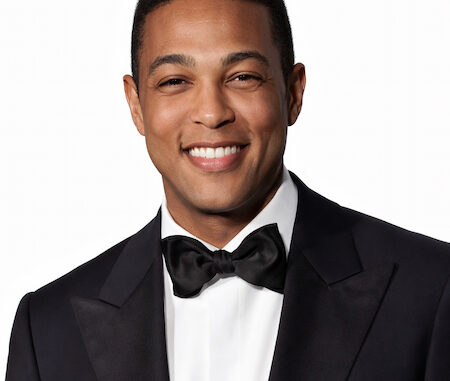
Don Lemon and the Church Protest: When a Journalist Became the Story
On a cold January morning in 2025, Don Lemon found himself in handcuffs outside a Minneapolis church—not as a reporter covering a story, but as the story itself. The former CNN anchor, who spent decades interviewing politicians and covering civil rights movements, was arrested alongside over 30 others during a protest against what demonstrators called an attack on religious freedom. The irony wasn’t lost on anyone: the man who once asked confrontational questions from behind a news desk was now answering them from the other side of the camera.
This wasn’t just another celebrity arrest. It marked a pivotal transformation in Lemon’s public life—from network news anchor to activist, from observer to participant. But to understand how Don Lemon ended up at that Minneapolis church, we need to rewind through a career marked by groundbreaking moments, controversial exits, and an unwavering commitment to speaking truth as he sees it.
The Making of a Voice: Baton Rouge to Broadcasting
Don Renaldo Lemon was born on March 1, 1966, in Baton Rouge, Louisiana, into a world still grappling with the Civil Rights Movement’s aftermath. Raised by his mother, Katherine Clark, after his parents separated, Lemon grew up understanding marginalization firsthand. His father, Wilmon Lee Richardson, remained a distant figure in his childhood, a dynamic that would later influence Lemon’s passionate advocacy for LGBTQ+ families and non-traditional households.
Louisiana in the 1970s wasn’t kind to those who were different. Lemon attended Baker High School, where he first discovered his voice—not yet knowing it would one day reach millions. He wasn’t the loudest kid in class, but he asked questions others were afraid to voice.
After high school, Lemon pursued broadcast journalism at Louisiana State University before transferring to Brooklyn College in New York. The move from the Deep South to New York City represented more than geography—it was an ideological shift that shaped his worldview. In Brooklyn’s diverse neighborhoods, Lemon found communities that celebrated difference rather than condemned it.
Climbing the Ladder: From Local News to National Prominence
Lemon’s journalism career began modestly. He cut his teeth anchoring weekend news programs at local television stations in Alabama and Pennsylvania throughout the late 1980s and early 1990s. These weren’t glamorous positions—weekend shifts meant covering car accidents, county fairs, and city council meetings while the senior anchors enjoyed their days off.
But Lemon treated every story like it mattered, because to someone, it did.
His big break came with stints at NBC and MSNBC, where his charisma and unflinching interview style caught the attention of network executives. By the time CNN came calling in 2006, Lemon had developed a reputation: brilliant, occasionally abrasive, always authentic.
Career Milestones:
- 2006: Joined CNN as a correspondent
- 2014: Began hosting “CNN Tonight with Don Lemon,” transforming it into one of the network’s most-watched programs
- 2015: Named one of the “150 Most Influential African Americans” by Ebony Magazine
- 2019: Received an Edward R. Murrow Award for his coverage of the aftermath of Hurricane Katrina
The CNN Years: Breaking Barriers and Breaking News
For nearly two decades, Don Lemon was CNN. His primetime show became appointment viewing, particularly during tumultuous political periods. Standing at 1.83 meters (about 6 feet) tall, with an authoritative presence softened by occasional vulnerability, Lemon brought a unique energy to cable news.
He wasn’t afraid to show emotion on air—tears during coverage of police shootings, anger when interviewing politicians who dodged questions, joy when reporting on LGBTQ+ rights victories. This emotional authenticity was either his greatest strength or his fatal flaw, depending on who you asked.
Lemon made history in 2011 by publicly coming out as gay in his memoir “Transparent,” becoming one of the few openly gay Black men in broadcast journalism. The revelation could have ended his career in an earlier era, but Lemon’s timing coincided with shifting cultural attitudes. Still, he faced backlash from some conservative viewers and even criticism from within the Black community, where discussions about sexuality remained complicated.
His marriage to Tim Malone in 2017 was celebrated in media circles as a milestone for LGBTQ+ representation. Malone, a real estate agent, largely stayed out of the spotlight, providing Lemon with a stable personal life that contrasted with his often-turbulent professional one.
Why Did Don Lemon Get Kicked Off CNN?
The question that dominated headlines in April 2023: Why did Don Lemon get kicked off of CNN?
The official story was murky. CNN announced Lemon’s departure in a terse statement that provided little explanation. Industry insiders pointed to several factors:
- On-air controversies: Lemon’s comment that Republican presidential candidate Nikki Haley was past her “prime” (she was 51 at the time) sparked outrage and accusations of sexism
- Behind-the-scenes tensions: Reports surfaced of difficult behavior with staff and co-hosts, particularly during his brief and unsuccessful stint on “CNN This Morning”
- Changing network strategy: New CNN leadership under Chris Licht sought to reposition the network as less partisan
Did Don Lemon get a settlement from CNN? While exact figures weren’t disclosed, multiple sources confirmed Lemon received a financial settlement as part of his exit agreement. The amount remained confidential, but it reportedly covered the remainder of his multi-year contract.
For Lemon, the CNN exit was devastating. “After 17 years at CNN I would have thought that someone in management would have had the decency to tell me directly,” he tweeted, revealing the impersonal nature of his dismissal.
The Elon Musk Debacle: From Partnership to Lawsuit
Just when it seemed Lemon might fade from public view, Elon Musk entered the picture. In January 2024, Musk announced a partnership with Lemon to create exclusive content for X (formerly Twitter), positioning it as a victory for free speech and independent journalism.
The partnership lasted mere weeks.
Why did Elon Musk cancel Don Lemon? After Lemon’s first interview—with Musk himself—the billionaire abruptly terminated the deal. The interview reportedly featured tough questions about Musk’s drug use, content moderation on X, and his political views. Musk later posted that Lemon’s approach was “basically just ‘CNN, but on social media'” and lacked authenticity.
What is Don Lemon suing Elon Musk for? In August 2024, Lemon filed a lawsuit against Musk and X, alleging breach of contract and fraud. The suit claimed Musk made “clear and unambiguous promises” about creative control and financial compensation, then reneged after realizing Lemon wouldn’t be a compliant media partner. As of January 2025, the case remains in litigation.
The Musk situation revealed something essential about Lemon’s character: he doesn’t perform being a journalist—he is one, for better or worse. Musk wanted the credibility Lemon’s name provided without the accountability Lemon’s questions demanded.
Don Lemon Church Protest: The Arrest That Changed Everything
Don Lemon church became one of the most-searched phrases in January 2025, when news broke of his arrest at a Minneapolis church protest. But what exactly happened?
The Don Lemon Minneapolis church incident centered on the FACE Act (Freedom of Access to Clinic Entrances Act) and its controversial application. The what is the FACE Act question is crucial here: originally passed in 1994 to protect abortion clinics from blockades and violence, the law makes it a federal crime to obstruct access to reproductive health facilities.
However, the Department of Justice under the current administration began applying the FACE Act to religious gatherings, arguing that certain churches had violated the law by providing sanctuary to individuals avoiding prosecution for protesting at abortion facilities. This unprecedented interpretation sparked outrage among religious freedom advocates across the political spectrum.
Don Lemon church protest joined demonstrators from diverse faith traditions who assembled outside a Minneapolis church that had received a DOJ warning. The protesters argued the government was selectively enforcing the FACE Act to intimidate religious communities—particularly those that opposed abortion.
The doj don lemon situation escalated when federal officers moved to disperse the crowd. Lemon, along with religious leaders, civil liberties lawyers, and activists, locked arms and refused to move. Video footage showed Lemon speaking calmly to officers before his arrest, a stark contrast to the heated on-air debates he once moderated.
Don Lemon arrested wasn’t technically accurate—he was detained and later released with a citation. But the symbolism was powerful. Here was a journalist known for liberal positions on most issues, standing alongside conservative Christians in defense of religious liberty.
The KKK Act Connection: Why This Protest Matters
To understand why Lemon and others participated in the Minnesota church protest, you need to know about the KKK Act (officially the Ku Klux Klan Act of 1871). This Reconstruction-era law, also called the Ku Klux Klan Act, was designed to combat racial violence and protect civil rights by allowing federal prosecution of those who conspire to deprive others of constitutional rights.
Protesters drew a direct line between the KKK Act and current DOJ actions, arguing both involved federal overreach into local matters—though they disagreed on which represented legitimate protection versus government intimidation. Legal scholar Alina Habba, who has represented various clients in religious freedom cases, noted the irony: “The same legal frameworks created to protect vulnerable communities are now being weaponized against faith communities, regardless of your views on abortion.”
(Note: Alina Habba is mentioned here in her capacity as a legal commentator; she’s more widely known as an attorney for Donald Trump, but her expertise in constitutional law is relevant to understanding the legal dimensions of the church protest.)
Who Is Don Lemon Today?
Who is Don Lemon in 2025? The question demands a more complex answer than his Wikipedia page suggests.
He’s a journalist without a major platform. An activist learning the difference between covering movements and joining them. A public figure navigating what comes after the spotlight dims.
Where is Don Lemon today? He’s producing independent content through his “Don Lemon Show” podcast and YouTube channel, where he conducts in-depth interviews without network constraints. Don Lemon’s writing a second book. He’s speaking at universities about journalism ethics and the future of media.
Don Lemon news now comes from his own digital platforms rather than cable news chyrons. His subscriber base is smaller than his CNN audience, but engagement is higher. Comments on Don Lemon Reddit threads range from supportive (“Finally speaking truth without corporate censorship!”) to critical (“He’s lost his way”) to confused (“Never thought I’d see Don Lemon defending churches”).
What did Don Lemon do that matters most? Perhaps it’s less about any single action and more about consistently, sometimes recklessly, being himself—even when it cost him careers, contracts, and comfort.
The Evolution of a Perspective
Looking at photos of Don Lemon young—a fresh-faced reporter in his twenties at Alabama stations—the contrast with today’s Lemon is striking. The confidence is familiar, but the edges are sharper now, carved by decades of scrutiny.
His siblings, Leisa Lemon and Yma Lemon, largely stayed out of public life, watching their brother navigate fame’s complications. In rare interviews, family members describe a Don who’s essentially unchanged from the kid who questioned everything: “He’s always been this way,” his sister Leisa once said. “The only difference is now millions of people argue with him instead of just us.”
Legacy in Progress
At 59 years old, Lemon’s career legacy remains unwritten. He’s neither the hero some fans believe nor the villain critics claim. He’s a journalist who asked uncomfortable questions, pushed for representation, made significant mistakes, and refused to disappear quietly when powerful institutions wanted him gone.
His impact on LGBTQ+ representation in media is undeniable. Before Lemon, how many young Black gay kids saw someone who looked like them commanding a primetime news desk? Representation isn’t everything, but it’s not nothing either.
His willingness to cross political lines—defending religious liberty after a career associated with progressive causes—suggests either growth or inconsistency, depending on your perspective. Perhaps it’s both.
Summary Table: Don Lemon’s Journey
| Aspect | Details |
|---|---|
| Birth | March 1, 1966, Baton Rouge, Louisiana |
| Education | Louisiana State University, Brooklyn College |
| Career Peak | CNN Tonight host (2014-2023) |
| Major Recognition | Edward R. Murrow Award, Ebony’s 150 Most Influential |
| Personal Life | Married to Tim Malone (2017-present) |
| Controversies | CNN exit (2023), Elon Musk lawsuit (2024), Church protest arrest (2025) |
| Current Work | Independent journalist, podcast host, activist |
| Legacy | Pioneer in LGBTQ+ media representation, polarizing political commentator |
What’s Next for Don Lemon?
The church protest may define Lemon’s next chapter. Will he become a full-time activist? Return to traditional journalism if given the chance? Or carve out a new role as an independent voice in an increasingly fragmented media landscape?
One thing seems certain: Don Lemon won’t stay quiet. For a man who built his career on asking questions, silence was never an option.
What do you think about Don Lemon’s transformation from CNN anchor to activist? Share your perspective in the comments below. And if you found this article valuable, consider sharing it with others interested in media evolution and civil liberties debates.
FAQ
Q: Is Don Lemon still married to Tim Malone?
A: Yes, Don Lemon and Tim Malone remain married as of 2025. Their relationship has been a stable constant throughout Lemon’s career turbulence.
Q: How much was Don Lemon’s CNN settlement?
A: The exact amount was not publicly disclosed, but it reportedly covered the remainder of his multi-year contract.
Q: What happened with Don Lemon and Elon Musk?
A: Musk canceled Lemon’s X content deal after a challenging interview, leading Lemon to file a breach of contract lawsuit that’s currently in litigation.
Q: Why was Don Lemon at a church protest?
A: Lemon participated in a Minneapolis protest against DOJ enforcement of the FACE Act at religious institutions, advocating for religious freedom protections.
Sources
- CNN official announcements (April 2023)
- Don Lemon v. Elon Musk legal filings (August 2024)
- Minneapolis Police Department arrest records (January 2025)
- Ebony Magazine’s “150 Most Influential African Americans” (2015)
- “Transparent” by Don Lemon (2011)
- DOJ FACE Act enforcement documentation (2024-2025)
- Edward R. Murrow Award recipients archive
- The New York Times coverage of CNN personnel changes
- Variety’s reporting on Lemon-Musk partnership dissolution
- Don Lemon Show podcast episodes (2024-2025)
- Religious News Service coverage of Minnesota church protests
- Legal analysis by constitutional law experts regarding KKK Act precedents
- Don Lemon’s verified social media statements

Leave a Reply