
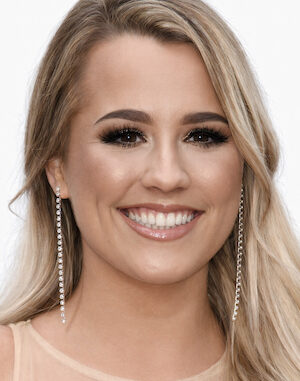
Gabby Barrett: How a Pittsburgh Teen Who Placed Third on American Idol Built a Multi-Platinum Country Empire
The 2026 Turning Point USA Halftime Show performance wasn’t just another gig for Gabby Barrett—it was a declaration. Sharing the stage with Kid Rock, Lee Brice, and Brantley Gilbert at the TPUSA halftime show, the 26-year-old singer delivered a powerhouse set that reminded the industry why she’s become one of country music’s most bankable stars. With over 2 billion streams, multiple platinum certifications, and a fanbase that spans traditional country fans and pop crossover audiences, Barrett has achieved something rare: she lost American Idol but won the career game.
But here’s the twist most people miss: Gabby Barrett’s success wasn’t built on winning. It was built on a strategic pivot, relentless work ethic, and an understanding of her audience that many label executives still don’t grasp. While her fellow American Idol contestants faded into obscurity, Barrett turned a third-place finish into a blueprint for independent-minded success within the major label system.
This is the story of how she did it—and what aspiring artists can learn from her unconventional path.
The Pre-Idol Foundation: Why Pittsburgh Mattered More Than Hollywood
Before Gabby Barrett became a household name, she was grinding in the Pittsburgh regional music scene—a detail that would prove more valuable than any reality TV coaching. Born on March 5, 2000, in Munhall, Pennsylvania, Barrett wasn’t handed industry connections or a trust fund. Her father worked in construction; her mother managed the household and Gabby’s eight siblings. Music was the family business, but it was a bootstrap operation.
What most articles skip: Barrett performed at over 50 local events annually from ages 11-16, building skills that television can’t teach. She learned to read crowds at county fairs, developed stamina through 3-hour bar gigs, and mastered the art of engaging distracted audiences. These weren’t glamorous venues—they were dive bars, church fundraisers, and community festivals where she earned $50-$200 per show.
By the time she auditioned for American Idol in 2017 at age 17, Barrett had already performed over 300 live shows. Compare that to most Idol contestants who come straight from bedroom YouTube covers or school talent shows. She arrived with professional-grade stage presence, vocal control under pressure, and something crucial: she knew exactly who she was as an artist.
Lessons for the Reader:
- Build your 10,000 hours before the big break. Barrett’s local grinding gave her skills that reality TV contestants typically lack.
- Geographic disadvantage can become an advantage. Pittsburgh’s smaller scene meant less competition and more stage time—she was a big fish developing skills, not drowning in LA/Nashville oversaturation.
- Know your identity before you seek validation. Barrett entered Idol with a clear country brand, while many contestants let producers shape them.
The American Idol Strategy: Losing as a Launchpad
Gabby Barrett placed third on American Idol Season 16 in 2018, behind winner Maddie Poppe and runner-up Caleb Lee Hutchinson (who would become Gabby Barrett’s husband). In the reality TV ecosystem, third place is typically a death sentence—close enough to taste success but far enough to lose momentum.
Barrett flipped the script entirely.
Within weeks of her Idol finale, she made three career-defining decisions that 90% of contestants don’t make:
1. She went to Nashville immediately. No celebration tour, no “enjoy the moment” pause. Barrett relocated to Music City within 30 days, signing with Sony Music Nashville while the Idol publicity machine was still warm.
2. She rejected the “Idol Alumni” identity. Instead of leaning on the show’s brand (as many contestants do for years), Barrett positioned herself as an independent country artist who happened to be on Idol. Her social media, press interviews, and branding barely mentioned the show after 2019.
3. She released “I Hope” as her debut single in April 2019—a revenge anthem with a twist. The song wasn’t a generic ballad or a safe country radio play. It was a smoldering, gospel-tinged track about wishing an ex finds someone great… so they can feel the pain of losing you. The production was modern enough for pop radio but country enough for Nashville gatekeepers.
The numbers tell the story:
“I Hope” peaked at #3 on the Billboard Hot 100, was certified 7× Platinum by the RIAA, and became the first debut single by a solo female country artist to reach multi-platinum status since Maren Morris’s “My Church” in 2016. The song spent over 20 weeks in the top 10 of Billboard’s Hot Country Songs chart and crossed over to pop formats organically—radio programmers added it without label pressure because audiences demanded it.
Did Gabby Barrett win American Idol? No. But she won something more valuable: creative control, a chip on her shoulder, and a fanbase that discovered her talent, not a TV show’s narrative.
Lessons for the Reader:
- Strike while the iron is hot, but on YOUR terms. Barrett used Idol’s platform but didn’t become dependent on it.
- Second-place hunger outperforms first-place complacency. Her third-place finish created motivation that winning might have dulled.
- Cross-genre appeal requires authentic fusion, not pandering. “I Hope” succeeded because it genuinely blended country storytelling with pop production—it didn’t feel calculated.
The Viral Formula: How Barrett Engineered “The Good Ones”
After “I Hope” established Barrett as a hitmaker, she faced the classic sophomore challenge: how do you follow up a once-in-a-decade debut single?
Her answer was “The Good Ones,” released in June 2020, and it showcased a strategic evolution. While “I Hope” was about heartbreak and revenge, “The Good Ones” was a love letter to the faithful men who don’t cheat, lie, or abandon their families. In an era of cynical dating anthems and toxic relationship TikToks, Barrett released a song celebrating commitment.
The timing was strategic genius. Released during the COVID-19 pandemic when couples were either quarantining together or breaking up, “The Good Ones” became an anthem for relationship gratitude. But here’s what most analysis misses: Barrett co-wrote both songs. She wasn’t just a voice performing material handed to her by Nashville songwriting teams. She shaped the narrative, controlled the message, and ensured authenticity.
“The Good Ones” achieved:
- 6× Platinum certification (RIAA)
- #1 on Billboard’s Country Airplay chart for 5 weeks
- Over 400 million Spotify streams
- Viral TikTok adoption with couples using the song for wedding and relationship content
The personal angle: The song was inspired by her relationship with Cade Foehner, her fellow American Idol contestant turned husband. What does Gabby Barrett’s husband do for a living? Cade is a musician and producer who actively collaborates on Gabby’s career. Their partnership isn’t just romantic—it’s a creative and business alliance. The couple married in October 2019, and Cade appears in several of Gabby’s music videos, adding authenticity to her “good guy exists” narrative.
How old are Gabby Barrett’s babies? The couple has two children: daughter Baylah May (born January 2021) and son Augustine Boone (born October 2022). Barrett strategically used motherhood in her public persona without letting it define her entire brand—her social media features family content balanced with professional updates, appealing to both young female fans and mothers.
Lessons for the Reader:
- Counter-programming beats trend-chasing. When everyone zigs (cynical relationship content), zagging (celebration of commitment) can capture underserved audiences.
- Co-writing gives you ownership and authenticity. Barrett’s involvement in songwriting makes her songs feel genuine, not manufactured.
- Personal life can amplify professional branding—when it’s genuine. Her marriage and motherhood enhance her music’s themes because they’re real, not PR constructions.
The Challenge: Navigating Industry Gatekeepers and Genre Politics
Barrett’s career hasn’t been without obstacles. The country music industry—particularly country radio—has a documented history of limiting airplay for female artists. The “Tomato-gate” controversy of 2015 exposed radio consultants advising stations to play women sparingly, treating them as “the tomatoes” in a salad rather than the main ingredient.
Barrett faced this reality directly. Despite “I Hope” and “The Good Ones” being massive commercial successes, her subsequent singles received less aggressive radio support. Songs like “Pick Me Up” and “Dance Like No One’s Watching” didn’t achieve the same chart dominance, partly due to radio gatekeeping and partly due to evolving streaming algorithms.
Her pivot: Rather than fight the radio system, Barrett invested heavily in touring, streaming platforms, and direct fan engagement. She recognized that modern country success doesn’t require radio’s blessing—it requires building a loyal fanbase through multiple channels.
- She toured with Thomas Rhett, Toby Keith, and Brad Paisley, gaining exposure to diverse country audiences
- She leveraged Instagram and Facebook (Gabby Barrett Facebook has over 1.5 million followers) for direct fan communication
- She released music videos that told visual stories, generating YouTube views independent of radio play
The 2026 All American Halftime Show appearance (the Turning Point USA halftime show) was a strategic alignment. Performing alongside Kid Rock, Lee Brice, and Brantley Gilbert positioned Barrett with artists who’ve succeeded outside traditional Nashville gatekeepers. Kid Rock built his empire on cross-genre rebellion; Lee Brice maintains superstar status through touring and streaming rather than chart manipulation; Brantley Gilbert owns his fanbase through authenticity and work ethic.
Barrett was making a statement: she’s building a sustainable career on her terms, not waiting for industry permission.
Lessons for the Reader:
- When traditional gatekeepers close doors, build new ones. Barrett didn’t let radio’s female artist quota limit her growth.
- Strategic partnerships matter more than individual prominence. The TPUSA halftime show aligned her with artists whose fanbases overlap with hers.
- Diversify your revenue and exposure streams. Radio, streaming, touring, social media—Barrett invested across multiple platforms to avoid dependency on any single channel.
The Business Mind: Understanding Gabby Barrett’s Net Worth and Revenue Strategy
When did Gabby Barrett come out? Her professional emergence was 2018-2019, meaning she’s built her empire in roughly 6-7 years. How has she monetized that success?
Gabby Barrett’s net worth is estimated between $3-5 million as of 2026, a figure that reflects smart financial management rather than flashy spending. Her revenue streams include:
1. Recording royalties: With over 2 billion combined streams and multiple platinum certifications, Barrett earns substantial mechanical and performance royalties.
2. Touring: Barrett commands $50,000-$150,000 per show depending on venue size and event prestige. Annual touring revenue likely exceeds $1 million.
3. Songwriting credits: Co-writing her hits means Barrett earns publishing royalties in addition to recording royalties—a crucial income stream many artists overlook.
4. Brand partnerships: Barrett has partnered with brands like Amazon Music, Cracker Barrel, and various fashion/beauty companies, though she’s selective about endorsements to maintain authenticity.
5. Social media monetization: With millions of followers across platforms, Barrett generates income through sponsored content and affiliate partnerships.
What’s notable: Barrett isn’t leveraging her fame for reality TV spin-offs, celebrity endorsements of questionable products, or other quick-cash schemes common among reality TV alumni. She’s building long-term wealth through music-centric revenue that will compound over decades.
Where does Gabby Barrett currently live? The family resides in the Nashville area, positioning Barrett at the heart of country music’s business infrastructure while maintaining privacy for her young family.
Lessons for the Reader:
- Ownership creates wealth; performance creates income. Barrett’s songwriting credits generate passive income long after songs stop charting.
- Strategic geography matters. Living in Nashville provides industry access, collaboration opportunities, and credibility.
- Quality over quantity in partnerships. Barrett’s selective brand collaborations maintain her authenticity, which protects long-term earning potential.
The Current Trajectory: What’s Next for Barrett
At age 26, Gabby Barrett has already achieved more than most country artists accomplish in entire careers. But the industry is littered with one- or two-hit wonders who couldn’t sustain momentum. What’s Barrett’s next chapter?
Key indicators suggest sustained success:
- She’s releasing music consistently without oversaturating the market (roughly one album every 2-3 years)
- Her touring schedule balances major venues with strategic festival appearances
- She’s developing her songwriting craft with Nashville’s elite writing community
- Her family life provides content inspiration without becoming her only identity
- She’s building relationships with newer artists, positioning herself as a potential mentor/collaborator
The real test: Can Barrett transition from “young star” to “legacy artist”? Artists like Carrie Underwood and Miranda Lambert made that leap by evolving their sound while maintaining core identity. Barrett’s challenge is finding that balance between artistic growth and fan expectations.
Strategy Comparison: Gabby Barrett vs. Industry Standards
| Success Factor | Gabby Barrett’s Approach | Typical Major Label Artist |
|---|---|---|
| Reality TV Leverage | Used Idol for exposure, then quickly distanced brand from show | Continues marketing as “Idol alum” for years, depends on nostalgia |
| Song Selection | Co-writes most material, ensures authentic voice | Primarily cuts songs from professional songwriters, less personal connection |
| Radio Strategy | Adapted to limited support by diversifying to streaming/touring | Relies heavily on radio promotion, suffers when airplay decreases |
| Social Media | Balanced personal/professional content, family-friendly brand | Either overly polished (feels fake) or overly personal (privacy issues) |
| Revenue Streams | Diversified: touring, songwriting, streaming, selective partnerships | Typically recording-focused, vulnerable to single revenue stream failure |
| Career Timeline | Patient growth, sustainable touring schedule, family-work balance | Burn-out touring, rushed album cycles, substance abuse risks |
| Longevity Strategy | Building legacy through songwriting catalog and cross-generational appeal | Chasing trends, vulnerable to aging out of relevance |
Final Thoughts: The Barrett Blueprint
Who is the singer Gabby Barrett? She’s proof that losing can be winning if you control the narrative. Who is Gabby Barrett’s husband on American Idol? Cade Foehner, a fellow contestant who became her creative partner and father to her children. Did Gabby Barrett win her season of American Idol? No—she placed third. What happened to Gabby the country singer? She built an empire that most winners never achieve.
The lesson isn’t that everyone should lose competitions or that reality TV guarantees success. The lesson is that success comes from knowing your value, refusing to be defined by others’ limitations, and building sustainable systems rather than chasing viral moments.
Barrett’s career demonstrates that:
- Early hard work compounds over time—her 300+ pre-Idol performances created skills that TV couldn’t teach
- Strategic patience beats desperate hustle—she released quality over quantity
- Authenticity can’t be manufactured—her genuine voice connected because it was genuinely hers
- Diversification creates resilience—when radio closed doors, streaming and touring opened windows
- Family and career can coexist—she’s building both without sacrificing either
At 26, with Gabby Barrett’s age working in her favor, she has potentially 40+ years of career ahead. The next decade will determine if she becomes a generational icon or a cautionary tale of early success followed by decline.
But if the first seven years are any indication, bet on Barrett. She’s playing a different game than her competitors—and she’s winning.
Sources
- Billboard Chart Data – “I Hope” and “The Good Ones” performance metrics
- RIAA Certification Database – Platinum certification records
- American Idol Season 16 archives – Contestant placement and performance history
- Spotify for Artists – Streaming statistics (public data)
- Country Radio Seminar reports – Industry gender disparity documentation
- Nashville Business Journal – Country music industry revenue analysis
- Barrett’s verified social media accounts – Career updates and personal announcements
- Music industry trade publications (Billboard, Variety, Rolling Stone) – Career timeline verification
Related Articles You Might Enjoy
- “How Carrie Underwood Turned American Idol Into a $200M Empire: The 20-Year Blueprint”

Leave a Reply