
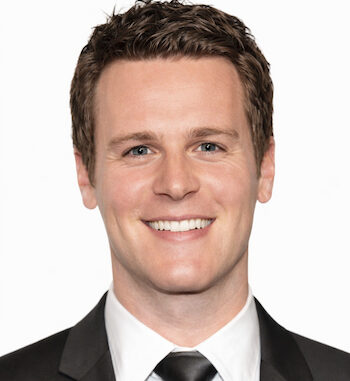
The Groff Method: How a “Nerd from Lancaster” Redefined the 21st-Century Leading Man
In the ever-evolving landscape of the digital creator economy and the entertainment industry, few figures represent the “long game” quite like Jonathan Groff. While many modern stars burn out in the chase for viral metrics, Groff has spent two decades building a career blueprint defined by high-value versatility and an uncompromising commitment to “people-first” storytelling.
From the spit-flying royalty of King George III to the stoic intensity of an FBI profiler, his journey offers a masterclass in professional pivoting and personal branding. This deep dive analyzes the strategic maneuvers that transformed a Pennsylvania farm boy into a global icon, offering actionable lessons for any creator looking to build a sustainable, high-impact career in 2026.
The Hook: The 20-Year Overnight Success
In June 2024, Jonathan Groff stood on the stage of the Lincoln Center, clutching his first Tony Award for Best Actor in a Musical for Merrily We Roll Along. It was a “breaking point” in the best sense—a culmination of a 20-year journey that began with him waiting tables in New York City.
The industry buzz surrounding this win wasn’t just about his performance as Franklin Shepard; it was a validation of his career strategy. While the Hamilton explosion in 2015 made him a household name (and a meme-able legend for “You’ll Be Back”), Groff didn’t stay in the “Broadway box.” He leveraged that cultural capital to dominate diverse niches, from the $1.45 billion Frozen franchise to the psychological depths of Netflix’s Mindhunter.
Today, with his recent 2025/2026 turn in the dance-heavy Bobby Darin biopic musical Just in Time, Groff has proven that a career isn’t a straight line—it’s a series of strategic expansions.
The Blueprint: 3 Pillars of the Groff Strategy
1. The Versatility Venn Diagram (Industry Diversification)
Groff’s career is a case study in niche bridging. He doesn’t just work in theater; he occupies the center of a Venn diagram where Broadway, Voice Acting, and Prestige TV overlap.
By voicing Kristoff in Frozen, he secured a “passive” global brand presence that appeals to a multi-generational demographic. Simultaneously, his work in Mindhunter established his “serious actor” credentials with a completely different audience. This diversification is the ultimate risk management strategy.
Lessons for the Reader:
-
Identify Your “Secondary Niche”: Don’t just be a writer; be a writer who understands data analytics. Cross-pollinating skills makes you indispensable.
-
Build a Multi-Generational Portfolio: Seek projects that appeal to different age brackets to ensure long-term relevance.
-
Leverage “High-Volume” Wins: Use a mainstream success (like a viral video or a major role) to fund and fuel “prestige” passion projects.
2. The “Community-First” Network Effect
Groff is famous for his “soul mate” connections with collaborators like Lin-Manuel Miranda and Lea Michele. These aren’t just friendships; they are strategic creative alliances.
When Lin-Manuel Miranda kissed Jonathan Groff during the Hamilton curtain call, it was a moment of genuine affection that also served as a massive organic marketing beat. His career is built on the principle that your network is your net worth. He doesn’t just “network up”; he grows alongside a peer group that constantly creates opportunities for one another.
Lessons for the Reader:
-
Focus on Radical Collaboration: Instead of competing with peers, find ways to co-create. A “rising tide” lifts all creators.
-
Invest in Relational Longevity: Groff’s 15-year partnership with director Michael Mayer (Spring Awakening to Little Shop of Horrors) shows that long-term loyalty yields better creative results than transactional gigs.
-
Be a “Connector”: Actively introduce people in your network. Being the person who facilitates success for others makes you the hub of your industry.
3. Radical Authenticity as a Brand Shield
As a prominent LGBTQ+ figure, Groff faced the “Newsweek Era” of 2010, where critics openly questioned if a gay actor could convincingly play a straight romantic lead like Jesse St. James in Glee.
Instead of retreating or conforming, Groff chose radical transparency. He leaned into roles that explored the queer experience (HBO’s Looking) while simultaneously taking on “macho” or “neutral” roles in The Matrix Resurrections and Knock at the Cabin. By refusing to be pigeonholed, he deconstructed the “typecasting” myth and built a brand based on authenticity rather than artifice.
Lessons for the Reader:
-
Own Your Narrative Before Others Do: Don’t let industry standards define your limits. Use your unique identity as a competitive advantage.
-
Lean Into “High-Friction” Truths: The things that make you “different” in your industry are often your most valuable SEO and branding assets.
-
Practice “Selective Transparency”: Share your journey and challenges (like Groff did with his coming-out story) to build deep trust with your audience.
The Human Factor: The “One Life” Pivot
Every success story has a hidden failure. For Groff, it was the abrupt end of his first major TV role. In 2007, he was cast in the soap opera One Life to Live as Henry Mackler, a character involved in a school shooting storyline.
Following the real-life tragedy at Virginia Tech, the network nixed the storyline and his character was written off. At 22, he faced the reality that talent doesn’t always protect you from external shifts. He pivoted immediately back to the stage, refocusing on the “artistic heart” he mentioned in his 2024 Tony speech. This resilience—moving from a canceled TV arc to a Tony-nominated Broadway run in Spring Awakening—is what defines a “pro” creator.
Data & Evidence: The “Groff Effect” by the Numbers
Conclusion: The Forward-Looking Blueprint
Jonathan Groff’s journey from a 140-acre farm in Pennsylvania to the pinnacle of Broadway and Hollywood is not an accident of fate. It is the result of diversification, authentic branding, and relational investment. As we look toward the remainder of 2026, Groff’s move into “Just in Time” signals a new phase: the “Mastery Phase,” where he is willing to undergo grueling physical training (10 weeks of dance prep) to conquer a skill (dancing) he previously avoided. For creators, the lesson is clear: your current “success” is just a platform for your next “learning curve.”
Industry Standard vs. The Groff Blueprint
Sources:
-
Playbill Archive: Jonathan Groff Career Timeline
-
The Hollywood Reporter: The Making of Merrily We Roll Along (2024)
-
Variety: Frozen and the Evolution of the Modern Voice Actor
-
Tony Awards Official Press Room (2024)
Related Articles:

Leave a Reply