
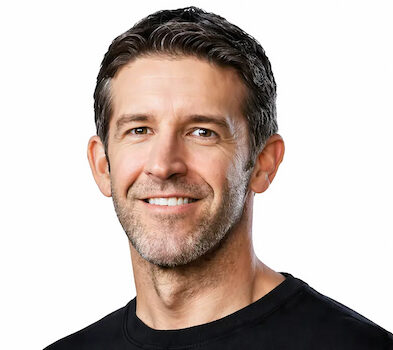
John Ternus: The Engineer Who Quietly Built Apple’s Future — And Now Leads It
On April 20, 2026, Tim Cook — the man who guided Apple to a staggering $4 trillion market cap and stood in Steve Jobs’s enormous shadow for 15 years — announced he was stepping down as CEO.
The successor he named was not a flashy Silicon Valley disruptor. He was not a former McKinsey partner or a Wall Street darling. He was John Ternus: a 51-year-old mechanical engineer from California who had spent 25 of his working years quietly inside Apple Park, turning screws — sometimes literally — on products that billions of people now hold in their hands every day.
For most of the world, April 20, 2026, was the first time they’d heard his name. For those who follow Apple’s inner architecture, it was the day the inevitable finally arrived.
This is not just the story of a corporate succession. It is a career blueprint — one of the most compelling and instructive in modern tech — about the power of depth over breadth, craft over self-promotion, and patience over ambition. It is the story of what happens when you spend two and a half decades being the most trusted person in the room.
The Pivot Point: The M1 Gamble
In 2020, Apple faced a “breaking point.” The Mac lineup was stagnating, hampered by thermal issues and performance ceilings from third-party processors. Ternus, then a rising executive, didn’t just iterate; he led the transition to Apple Silicon.
This wasn’t just a technical change—it was a “brain transplant” for the Mac. By ditching Intel, Ternus proved that he could manage high-stakes, cross-functional shifts that redefined an entire product category. This success solidified him as the “right person” to succeed Tim Cook.
Lessons for the Reader
-
Vertical Integration Wins: Control as many variables of your project as possible to ensure quality.
-
Identify the Bottleneck: Success often comes from removing the one external dependency holding you back.
-
Calculated Bravery: Big pivots require years of “quiet” preparation before the loud reveal.
Early Life and Education: The Making of an Engineer
John Patrick Ternus was born in May 1975 in California, making him 50 years old as of 2026 (Zodiac Sign: Taurus). His ethnicity is American of European descent, and his nationality is American.
He belongs to a generation that grew up watching personal computers enter households for the first time — a front-row seat to the hardware revolution that would define his career.
Ternus is notoriously private about his parents, siblings, and family background, which mirrors his broader philosophy: let the work speak.
What we know is that his interest in mechanics was evident from early childhood, and it steered him toward one of the most rigorous engineering programs in the United States.
He earned a Bachelor of Science in Mechanical Engineering from the University of Pennsylvania in 1997.
At Penn, he was not just an academic — he competed on the men’s swimming team, a discipline that instills the exact qualities that would later define his leadership: consistency, quiet endurance, and the ability to perform under pressure without theatrics.
His senior project was remarkable in its ambition and humanity. Ternus designed a mechanical feeding arm operable by individuals with quadriplegia using only head movements.
This was not just an engineering exercise. It was a signal — a young man who understood that the deepest purpose of engineering is to serve people, a philosophy that would echo through every Apple product he later shaped.
Lessons for the Reader:
- Your college projects and “side work” reveal your core values. Make them count.
- Competitive athletics (or any discipline requiring consistent effort over years) builds the psychological muscle for long careers.
- Engineering is not just technical mastery — the best engineers obsess over human experience.
The First Chapter: Learning the Language of Hardware
From Virtual Reality Headsets to Apple’s Product Design Floor
After graduating from Penn in 1997, Ternus didn’t rush to the most prestigious company with the biggest salary.
His first job was at Virtual Research Systems, a small firm specializing in virtual reality headsets at a time when VR was still a niche, experimental technology.
This was a defining decision — not because VR was fashionable (it wasn’t, not yet), but because it forced him to solve genuinely hard hardware problems: optics, ergonomics, display integration, and the challenge of making immersive technology wearable.
Decades later, when Apple launched the Vision Pro, Ternus’s foundational literacy in spatial computing hardware was not accidental. It was the dividend of an early career bet that looked unconventional at the time.
In July 2001, Ternus joined Apple — his second job, at only 26 years old, walking into a company that Steve Jobs was literally rebuilding from the inside out. The iPhone didn’t exist. The Mac was fighting for relevance. The entire tech world was reeling from the dot-com crash. It was, in retrospect, one of the best possible moments to embed yourself inside Apple’s culture.
His first assignment was the Apple Cinema Display — a large external monitor requiring magnets to hold a glass screen in place.
Early colleagues noted that when skeptics challenged the approach, Ternus was the one making the case and staying close to his team on the open-plan floor, never retreating behind a closed office door. This would become his signature: technical confidence paired with collaborative presence.
Lessons for the Reader:
- Your first job matters less than what you learn in it. Choose for depth of problem, not prestige of brand.
- Early exposure to “niche” technology creates compound returns years later when that technology becomes mainstream.
- Entering a company during a rebuilding phase — not at its peak — gives you foundational ownership and rare learning opportunities.
The Decade of Invisible Excellence: 2001–2013
Building a Resume No One Sees But Everyone Uses
For twelve years, John Ternus did something that modern career advice rarely celebrates: he stayed. While peers job-hopped across Silicon Valley, collecting roles and LinkedIn endorsements, Ternus deepened his roots at Apple with the patient intensity of someone who understood that mastery takes time.
He worked across product design and hardware engineering on generation after generation of products. He was not a keynote star. He was not writing thought leadership essays. He was in the building, testing tolerances, reviewing manufacturing processes, and learning the language of how Apple makes things.
By 2013, Apple recognized what it had in Ternus and appointed him Vice President of Hardware Engineering under Dan Riccio.
This new role gave him direct stewardship over some of Apple’s most consequential product lines, including the iPad — transforming it from a novelty tablet into a professional productivity platform — and the early architecture of AirPods, which would later become one of Apple’s most profitable product categories with over 100 million units shipped annually.
His leadership style in this period was consistently described by colleagues as calm, collaborative, and ferociously detail-oriented. In an industry that rewards noise, Ternus operated in precision silence.
Lessons for the Reader:
- In a world obsessed with job-hopping, deep institutional knowledge is a rare competitive advantage.
- The transition from individual contributor to VP is rarely about brilliance alone — it is about becoming the person others trust to hold complexity.
- Influence inside organizations grows from demonstrated reliability over time, not from self-promotion.
The Quiet Architect: Becoming the Most Important Hardware Leader in the World
How Ternus Shaped the Products in a Billion Pockets
When Ternus was elevated to Senior Vice President of Hardware Engineering in 2021, replacing Dan Riccio, he assumed command of the most consequential hardware portfolio in consumer technology. His remit: every piece of hardware that Apple ships — iPhone, iPad, Mac, Apple Watch, AirPods, and Apple Vision Pro.
At this point, the numbers tell part of the story. Under his expanded oversight:
- iPhone — still the world’s most profitable consumer electronics product, generating over $200 billion in annual revenue
- AirPods — a product category Ternus helped shape from inception, with a market share exceeding 25% of the global wireless earbuds market
- Mac — a line he transformed through the most technically ambitious chip transition in Apple’s history
- Apple Watch — a health and lifestyle platform reaching over 100 million active users worldwide
- Apple Vision Pro — a $3,499 spatial computing device that represented Apple’s most complex hardware project since the original iPhone
This was not portfolio management. This was hardware stewardship at planetary scale.
Lessons for the Reader:
- Technical expertise that spans multiple product categories is worth more than deep expertise in one. Build T-shaped skills: broad awareness, deep execution.
- The most important career moves are often lateral expansions of responsibility, not just upward promotions.
- When given a large portfolio, don’t try to master everything at once. Prioritize ruthlessly and trust your teams.
The Apple Silicon Gambit: Ternus’s Defining Achievement
How He Led the Most Audacious Chip Transition in Tech History
If there is a single chapter in John Ternus’s career that defines his capacity for bold strategic execution, it is the Apple Silicon transition — the decision to abandon Intel processors in favor of Apple-designed M-series chips across the entire Mac lineup.
Announced at WWDC 2020 and executed with breathtaking speed, this transition was Ternus’s masterwork. He didn’t just oversee it; he championed it internally at a time when the risks were enormous.
Mac software depended on Intel’s x86 architecture. Enterprise customers feared compatibility breakdowns. The industry was skeptical.
What happened next silenced the critics. The first M1 MacBook Air outperformed Intel machines costing twice as much while delivering significantly longer battery life. Independent benchmarks confirmed what Apple had promised: this was not a lateral move. It was a generational leap.
What separated Ternus in this moment was not just that he managed the project, but that he understood the silicon at a deep level.
He was instrumental in ensuring the M-series architecture was tailored to real-world usage patterns — the way humans actually work with machines — not just to synthetic benchmark scores. This is engineering leadership at its highest expression: connecting chip architecture to human experience.
The M-series chips have since powered the transformation of the entire Mac lineup and contributed to Apple’s sustained hardware margin leadership in the PC industry.
Lessons for the Reader:
- The best leaders don’t just manage transitions — they understand the technical substance deeply enough to make judgment calls others can’t.
- Bold bets require internal advocacy. Champions who can translate technical complexity into strategic confidence are rare and valuable.
- When you’re leading a major platform shift, obsess over real-world user experience, not benchmark theater.
The Human Factor: When Humility Becomes Strategy
The Challenge of Leading Without Being Seen
Every great career has a chapter that tests character. For John Ternus, that chapter was not a dramatic public failure but rather a more subtle and sustained challenge: leading at the highest levels of the world’s most watched company while remaining almost entirely invisible to the outside world.
In an era of CEO-as-celebrity — where tech leaders build personal brands, give TED Talks, and measure their influence in Twitter followers — Ternus chose a radically different path. He gave almost no interviews. He had no significant social media presence. He let Apple’s products carry the story.
This created a real professional tension. The same qualities that made him trusted inside Apple — discretion, focus, depth — made him an unknown quantity to investors, media, and the broader public. When Bloomberg first identified him as a likely CEO successor, many industry observers responded with: Who?
His response to this challenge reveals everything about his character. In a 2024 commencement speech at the University of Pennsylvania, he offered this guidance to graduates: “Always assume you’re as smart as anyone else in the room, but never assume you know as much as they do.”
This is not false modesty. It is a sophisticated understanding of how expertise compounds — and a direct rebuttal to the ego-driven leadership style that has produced so many tech industry failures.
Ternus principle
Ternus built his career on the principle that visible confidence and genuine intellectual humility are not opposites; they are complements.
He also shared a memory of Steve Jobs that speaks volumes about his professional philosophy.
Jobs had pulled a chest of drawers away from the wall, looked at the back panel, and reflected on how the carpenter had finished it beautifully — even though no one would ever see it.
Ternus’s response: “I think about that all the time, because I think that perfectly exemplifies what we do here.”
That is not a soundbite. It is a worldview.
Lessons for the Reader:
- Invisibility is not the same as irrelevance. Deep trust within an organization is more durable than public profile.
- Intellectual humility is not weakness — it is the mechanism by which smart people keep learning in a rapidly changing field.
- The “invisible” parts of your work — the ethics, the care, the craft — define your character more than the visible wins.
The Ternus Leadership Formula: What Makes Him Different
Decoding the Principles Behind a 25-Year Climb to the Top
Leadership books are full of frameworks. Ternus’s actual approach distills into something more specific — a set of operating principles that explain both his longevity and his elevation.
1. Engineering feasibility as creative constraint. In hardware, design ambition must be filtered through what can physically be manufactured, cooled, powered, and scaled. Ternus understands this not as a limitation but as a creative discipline. His leadership logic: product goals are resolved at the system level, not at the feature level.
2. Team proximity over executive distance. Early colleagues noted that Ternus stayed on the open-plan floor rather than retreating behind a closed office. This wasn’t just management style — it was intelligence gathering. The people closest to the work know things the executive suite doesn’t.
3. Cross-category literacy. Managing hardware across iPhone, Mac, Watch, AirPods, and Vision Pro simultaneously is not a portfolio exercise. It is a systems-thinking discipline. Ternus built expertise in how the constraints of one product category inform and challenge the others — a rare and powerful kind of engineering knowledge.
4. Long-term trust over short-term visibility. Tim Cook did not choose Ternus because he was the most famous executive at Apple. He chose him because Ternus had demonstrated, over 25 years, that he could be trusted with the most important things. Trust at that level is not built in months. It is the compound interest of daily excellence.
Lessons for the Reader:
- Build your leadership identity around the specific discipline of your domain, not generic management concepts.
- Stay close to the work. Executive distance is often the enemy of good judgment.
- Think in systems, not silos. The most valuable people in any organization understand how the parts connect.
- Trust is the ultimate career currency. It cannot be faked or rushed. Invest in it daily.
The Succession Signal: Why Tim Cook Chose Ternus
The Strategic Logic Behind Apple’s Most Important Boardroom Decision
The story of why John Ternus was chosen over other Apple executives is as instructive as Ternus’s own career.
Apple’s Chief Operating Officer Jeff Williams — long considered Tim Cook’s natural heir — stepped back from operational responsibilities in July 2025, removing himself from succession consideration.
Craig Federighi (Software) and Eddy Cue (Services) remained in their roles but were not moved to the succession track. Bloomberg’s Mark Gurman, whose Apple sources have proved consistently accurate, had been signaling Ternus as the “most likely heir apparent” for months before the announcement.
The board’s reasoning, articulated by Chairman Arthur Levinson, pointed to three qualities: Ternus’s deep technical knowledge, his relentless focus on great products, and his love of Apple as an institution.
This last quality — which sounds like soft language — is actually strategic. Apple’s culture is famously fragile to leadership changes that prioritize financial engineering over product vision. The board wanted someone who would guard the culture, not just manage the balance sheet.
Bloomberg described Ternus as “charismatic and well-liked” and “the youngest member of Apple’s executive team” — a detail that matters enormously for a company that has had only two CEOs in this millennium and clearly prizes long leadership tenures.
As a Forrester principal analyst noted in response to the announcement: “Ternus is a hardware engineer, which signals that Apple will seek differentiation in its physical products even as it looks to reframe the device as a substrate for intelligent experiences.”
Lessons for the Reader:
- Being identified as the “trusted” person in an organization often matters more than being the most vocal or most visible.
- Long-tenured executives at major companies develop institutional knowledge that is genuinely irreplaceable — and boards know it.
- When assessing your career trajectory, ask: “Who trusts me, and with what?” The answer tells you more than any performance review.
The AI Challenge: What Ternus Inherits and What It Means for AAPL
The Unfinished Equation at the Heart of Apple’s Next Chapter
John Ternus is stepping into the CEO role at a moment of extraordinary company strength — and one significant strategic vulnerability: artificial intelligence.
Apple’s AAPL stock reflects the market’s excitement about the transition, but analysts have consistently flagged that Apple’s AI strategy lags behind Google, Microsoft, and Meta.
Apple Intelligence — introduced under Tim Cook — was widely regarded as a promising but incomplete response to the AI moment. Competitors have moved faster on large language models, AI-native applications, and developer ecosystems.
Ternus inherits this challenge as his most urgent strategic priority. The question the industry is asking: can a hardware engineer lead an AI-first strategy?
The counterargument is compelling. Johny Srouji, Apple’s longtime chip architect, has been promoted to Chief Hardware Officer to fill the gap Ternus leaves in engineering leadership.
This frees Ternus to focus on the broader strategic agenda — including AI — while trusting Srouji to maintain Apple’s silicon advantage. Tim Cook will remain as Executive Chairman, providing continuity and advisory support.
The Vision Pro, while commercially challenged at launch, represents a hardware bet on a future where spatial computing and AI converge.
Ternus understands this hardware platform more deeply than almost anyone alive. His ability to connect that hardware architecture to AI-native experiences may prove to be the synthesis Apple needs.
Estimated John Ternus Net Worth: Between $75 million and $100 million, built primarily through over 20 years of Apple stock grants, bonuses, and executive compensation. His SVP base salary was approximately $1 million, with total annual compensation (including stock) reaching an estimated $25–30 million.
As CEO, his compensation package is expected to align with Tim Cook’s, which has exceeded $60–90 million annually depending on performance-based stock awards.
Lessons for the Reader:
- New leaders are defined not just by what they inherit but by their first strategic priorities. Choose your battles carefully.
- Hardware expertise and AI strategy are not in conflict — the future of AI is deeply physical (chips, sensors, devices), and hardware engineers who understand this have a genuine advantage.
- Surround yourself with leaders who are stronger than you in your areas of relative weakness. That is not a sign of inadequacy; it is the highest form of strategic intelligence.
Personal Life: The Private Man Behind the Public Role
John Ternus: Married? Family? What We Know
John Ternus is as guarded about his personal life as he is visible on Apple’s product stages. He has never publicly identified a wife, partner, or children, and has consistently worked to keep family details out of public discourse. While some reports suggest he is married, no credible public confirmation exists. He maintains essentially no personal social media presence.
His age is approximately 50–51 years old as of 2026, born in May 1975 (making his Zodiac sign Taurus). His nationality is American. His ethnicity is of European-American descent. His religion has never been publicly discussed, and there is no credible information available on this topic.
On the question of John Ternus Reddit discussions — he has become a subject of significant community analysis and speculation, particularly around his Apple Silicon work and his succession as CEO. His privacy has made him an unusually enigmatic figure in a CEO class that typically over-shares.
In 2021, public records show a $2,900 political donation to Senator Chuck Schumer (D-NY) — the only known political financial disclosure from Ternus, suggesting moderate Democratic-leaning engagement rather than activist political identity.
The picture that emerges is of a man who has deliberately chosen depth of private life over breadth of public profile — consistent with every other dimension of his character.
The Steve Jobs Lesson He Carried for 25 Years
Craftsmanship as Philosophy
One story about John Ternus keeps resurfacing in every profile written about him, and it deserves a section of its own because it reveals something essential about how he thinks.
Steve Jobs once pulled a chest of drawers away from the wall, looked at the back panel — the part no one ever sees — and reflected on the fact that the carpenter had finished it beautifully. Not because anyone would notice. Because it was right.
Ternus has said this story stays with him. He connects it directly to Apple’s hardware philosophy: the quality of the work that nobody sees defines the quality of the work that everyone uses.
This is not aesthetic romanticism. It is a quality control philosophy with direct engineering applications. The internal architecture of an iPhone — the placement of antennas, the thermal design, the tolerances between components — is never visible to a consumer. But every consumer feels the result. Ternus has spent 25 years caring about the back of the drawer.
As the new Apple CEO, this philosophy will be tested at scale. Can it survive the quarterly earnings calls? Can it survive activist investors? Can it survive the AI arms race?
The answer, perhaps, is that it has to. Because the alternative — an Apple that starts finishing the back of the drawer carelessly — would be an Apple that has already lost its most important competitive advantage.
The Blueprint in Summary: What Every Career Professional Can Learn
12 Principles from the John Ternus Career Playbook
The career arc of John Ternus is not conventional. It does not follow the playbook of the modern tech CEO. It is slower, quieter, and more deeply rooted. But it produces something that faster paths often don’t: genuine authority.
Here are the core principles that define his journey:
- Choose depth over breadth in your early career — master a domain before you expand it.
- Your first job matters less than what you learn in it — early exposure to hard problems compounds over decades.
- Stay when others leave — institutional knowledge is undervalued in a world obsessed with mobility.
- Build trust daily, not annually — trust is the sum of thousands of small reliable acts.
- Let the work be visible, not yourself — the products speak louder than the personal brand.
- Intellectual humility is a competitive advantage — it keeps you learning in a fast-changing field.
- Understand what you’re making at the deepest level — don’t just manage the product; comprehend it.
- Finish the back of the drawer — the invisible quality defines the visible result.
- Stay close to the team — executive distance is the enemy of good judgment.
- Think in systems, not silos — cross-domain literacy is rare and powerful.
- Take the unconventional first bet — Ternus’s VR headset detour paid dividends 20 years later.
- Be the most trusted person in the room — it is the ultimate career destination.
Summary Strategy Comparison Table
| Dimension | John Ternus Approach | Industry Standard (Typical Tech CEO Path) |
|---|---|---|
| Career trajectory | 25 years at one company | Average 3–5 years per role, multiple companies |
| Personal branding | Minimal, product-first | High visibility, thought leadership content |
| Leadership style | Collaborative, floor-level presence | Top-down, executive distance common |
| Technical depth | Deep (hands-on silicon knowledge) | Often managerial, less technical over time |
| Public profile before CEO | Near-invisible | Typically high-profile succession signaling |
| Social media | Essentially none | Active presence on LinkedIn, X, etc. |
| Path to top job | Trust-building, product excellence | Mix of politics, visibility, and performance |
| Domain focus | Hardware engineering mastery | Broader business generalism |
| AI positioning | Inheriting challenge, hardware-first AI lens | Often AI-native narrative from start |
| Compensation model | 25-year equity accumulation (~$75–100M NW) | Often faster accumulation via multiple companies |
Forward-Looking Summary: What to Watch in the Ternus Era
As John Ternus officially becomes Apple CEO on September 1, 2026, three strategic storylines will define his early tenure:
1. The AI Reckoning. Can Ternus build a credible AI strategy that closes the gap with Google and Microsoft? His hardware advantage (M-series silicon, Vision Pro platform) may be the differentiator that makes Apple’s AI story uniquely compelling — but only if he can translate hardware excellence into software intelligence.
2. The Vision Pro Second Act. The Vision Pro was Apple’s most ambitious hardware project and its most commercially cautious launch. Ternus understands this platform better than anyone. The next 18 months will reveal whether he can find the product-market fit that the first generation didn’t fully achieve.
3. The Culture Continuity Test. Every new Apple CEO has faced the question: can the culture survive the transition? Ternus has lived inside that culture for 25 years. His appointment is, in part, a bet that Apple’s culture will not just survive but deepen under his leadership.
AAPL stock performance, Apple’s AI product announcements, and the Vision Pro roadmap will be the early signals. But if John Ternus’s career arc tells us anything, it is that the most important signals won’t be the ones visible on the surface.
They’ll be on the back of the drawer.
Quick Facts Table
-
Age: 50 (Born May 1975)
-
Nationality: American
-
Ethnicity: Caucasian
-
Zodiac Sign: Taurus (Reliable, persistent, practical)
-
Marital Status: Strictly private (No public records of John Ternus’s wife or husband exist).
- John Ternus Salary: Estimated $1M+ (base) as VP; expected to jump significantly as CEO.
Sources
-
- Apple Newsroom — Tim Cook to Become Apple Executive Chairman; John Ternus to Become Apple CEO (April 20, 2026)
- Wikipedia — John Ternus
-
- TechCrunch — Who is John Ternus, the incoming Apple CEO? (April 20, 2026)
-
- CNN Business — Who is John Ternus, the incoming CEO of Apple? (April 20, 2026)
-
- Fortune — Meet John Ternus, the 51-year-old former swimming champ who will succeed Tim Cook as Apple CEO (April 20, 2026)
-
- NerdZap — From Apple Silicon to CEO: the John Ternus era begins (April 2026)
-
- Apple Leadership Page — John Ternus
-
- IndianEagle — From Apple Product Design Team to Future CEO, Journey of John Ternus
-
- SEC Form 8-K — Apple Inc. FY2026 (Ternus Board Appointment)

Leave a Reply