
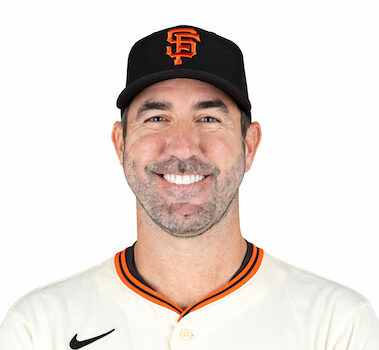
The Ageless Ace: A Deep Dive into Justin Verlander’s Blueprint for Longevity
The date is February 10, 2026. After a decade-long odyssey that saw him lift World Series trophies in Houston, endure the bright lights of New York, and test the coastal winds of San Francisco, the prodigal son has returned. Justin Verlander—the man who once defined a generation of Detroit Tigers baseball—has signed a one-year, $13 million contract to finish what he started in the Motor City.
But this isn’t just a nostalgia trip. At 43 years old, Verlander is the oldest active player in Major League Baseball, defying every biological clock and statistical projection. In an era where “velocity is king” often leads to “surgery is inevitable,” Verlander has mastered the art of the pivot. He isn’t just a pitcher; he is a Case Study in career sustainability.
How does a man whose fastball once touched 102 mph in 2007 still find himself in a starting rotation nearly 20 years later? The answer lies in a calculated blueprint of mechanical efficiency, psychological resilience, and a relentless refusal to let the “old man” in.
The Blueprint: Engineering a Two-Decade Dominance
Success at the elite level for twenty years isn’t an accident; it’s an engineering feat. Verlander’s career can be broken down into three distinct strategic phases that any professional—athlete or entrepreneur—can emulate.
1. The Mechanical Pivot: From Power to Precision
In his early years with the Detroit Tigers, Verlander was a “tight mover.” He relied on a high-velocity fastball and raw power. However, as he aged, the 100-mph heat became harder to summon on every pitch. Instead of fading away, Verlander worked with the Houston Astros’ data-driven staff to optimize his “spin rate” and “active spin.“
By focusing on how the ball moves rather than just how fast it travels, he maintained an elite Whiff % even as his average velocity settled into the 93–95 mph range. In 2025, while with the San Francisco Giants, Verlander still posted a 3.85 ERA across 152 innings—numbers that many pitchers a decade younger would envy.
2. Risk Management and the “1% Adjustment”
Verlander is a frequent adopter of new technology. He was one of the first veteran pitchers to fully embrace Statcast metrics to analyze his pitching stats. He doesn’t change his entire style at once; he makes “1% adjustments” to his release point or his grip. This prevents the “system shock” that leads to injury while keeping hitters off-balance.
3. The Financial Long Game: Deferred Value
His 2026 return to the Tigers includes a savvy financial structure: $11 million of his $13 million salary is deferred until 2030. This strategy allowed the Tigers to stay under the luxury tax threshold while guaranteeing Verlander a “retirement” income stream. It’s a masterclass in understanding your market value and leveraging it for long-term security.
Lessons for the Reader:
-
Adapt before you have to: Don’t wait for your primary skill to fail before developing a secondary one.
-
Use Data as a Mirror: Analyze your “output” (KPIs) to find where you are losing efficiency.
-
Value is more than “Now”: Sometimes, deferring a reward can create a better strategic outcome for all parties.
The Human Factor: The Tommy John Pivot at 37
In 2020, the “Invincible Verlander” narrative hit a brick wall. At age 37—an age where most pitchers are considering broadcasting careers—Verlander required Tommy John surgery. For most, this is a career-ender.
Verlander viewed the 12–14 month recovery not as a setback, but as a “reset.” He famously stated that the surgery gave him ranges of motion in his elbow he hadn’t felt in years. He attacked rehab with the same intensity he used to attack hitters in the 9th inning.
The result? In 2022, his first full season back, he went 18–4 with a 1.75 ERA and won his third AL Cy Young Award. He proved that failure isn’t a destination; it’s a diagnostic tool.
Lessons for the Reader:
-
The “Reset” Mindset: View major setbacks as an opportunity to fix underlying issues you were too busy to address during “peak performance.“
-
Patience is a Competitive Advantage: Verlander didn’t rush his 2021 return, ensuring his 2022 comeback was permanent.
The Power Couple: Beyond the Diamond
You cannot discuss Justin Verlander without mentioning his wife, Kate Upton. While fans often ask, “Who is worth more, Justin Verlander or Kate Upton?”, the reality is a combined empire built on different pillars of the creator economy.
As of 2026, Justin Verlander’s net worth is estimated at $200 million, with career earnings exceeding $400 million. Kate Upton’s net worth sits between $20 million and $30 million, built through a transition from global supermodel to entrepreneur and actress. Together, they represent a “Balanced Power” model.
Despite their high-profile status, they’ve maintained a grounded family life. Do Justin Verlander and Kate Upton have any kids? Yes, they are parents to daughter Genevieve (born 2018) and son Bellamy Brooks (born 2025). Verlander has explicitly stated that his desire to keep pitching is fueled by his children: “I want them to be able to remember me on the field.“
Data & Evidence: The Statistical Blueprint
| Metric | 2011 (MVP/Cy Young Year) | 2022 (Post-Surgery Cy Young) | 2025 (Last Full Season) |
| ERA | 2.40 | 1.75 | 3.85 |
| Strikeouts | 250 | 185 | 137 |
| Innings Pitched | 251.0 | 175.0 | 152.0 |
| Max Velocity | 102 mph | 98 mph | 96 mph |
| Contract Value | $12.8M (Approx) | $25M | $15M |
Summary: Is Justin Verlander the Best Pitcher of All Time?
The debate over the “Greatest of All Time” (GOAT) is subjective, but the “Longevity GOAT” conversation starts and ends with Verlander. He has navigated three different “eras” of baseball: the “Power Pitching” era, the “Juiced Ball” era, and the “Pitch Clock/Statcast” era.
Comparison: Verlander’s Strategy vs. Industry Standards
| Category | Typical Veteran Pitcher | Justin Verlander’s Approach |
| Injury Response | Retirement or “Innings Eater” role. | Total mechanical rebuild & “Elite” return. |
| Market Strategy | Chasing the highest 1-year AAV. | Deferrals and “Legacy” moves to winning teams. |
| Brand Management | Passive social media presence. | Strategic partnership with high-profile spouse & philanthropy. |
| Training | Traditional strength and conditioning. | Bio-mechanical analysis and “Tight Mover” sequencing. |
Conclusion: What Happens Next?
What has happened to Justin Verlander? He has come home. His 2026 season with the Detroit Tigers isn’t just a farewell tour; it’s a hunt for his 300th career win (he currently sits at 266 wins). Is Justin Verlander retiring? Not yet. As long as his stats show he can compete and his arm remains healthy, the “Ageless Ace” will continue to rewrite the playbook for what is possible in the fourth decade of life.
Sources:
-
MLB.com – Career Statistics and Transaction History
-
Spotrac – MLB Contract Breakdowns 2026
-
Celebrity Net Worth – 2026 Estimates
-
The Athletic – Detroit Tigers 2026 Roster Analysis
Related Articles:

Leave a Reply