
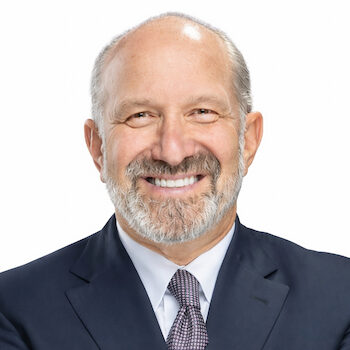
In the high-stakes corridors of Washington D.C., few figures command as much attention in 2026 as Howard Lutnick, the United States Secretary of Commerce. While most Cabinet members are career politicians, Lutnick is a “battle-hardened” billionaire who transformed a decimated bond firm into a global powerhouse.
His journey isn’t just a biography; it is a masterclass in adversity-driven growth and strategic pivot points. For any entrepreneur or professional looking to understand how to build—and rebuild—an empire, Lutnick’s career offers a blueprint for survival and dominance in the modern economy.
The Hook: The “Why Now”
On February 18, 2025, the U.S. Senate confirmed Howard Lutnick as the Secretary of Commerce in a 51-45 vote. By early 2026, he had already brokered a historic $550 billion investment commitment from Japan, including a $36 billion manufacturing package focused on natural gas and synthetic diamonds.
Lutnick’s “breaking point” wasn’t a policy debate; it was the morning of September 11, 2001. After losing 658 employees—including his brother—Lutnick faced a choice: let the firm die or out-innovate the tragedy. He chose the latter, and today, as the head of the U.S. Department of Commerce, he is applying that same “surfer’s theory” to American trade and industrial policy.
The Blueprint: How Howard Lutnick Built an Empire
1. The Technology Pivot: Front-Running the Future
Long before “digital transformation” was a buzzword, Lutnick realized that the traditional “voice brokerage” (people shouting on phones) was a dying breed. He invested heavily in eSpeed, an electronic trading platform, well before 9/11. When the physical offices were destroyed, the firm’s survival hinged on this digital infrastructure.
In his current role as Secretary of Commerce, Lutnick is applying this same foresight to critical minerals and semiconductors. He has shifted the Department’s focus toward “strategic trade,” ensuring that America isn’t just a consumer but a primary manufacturer of the world’s most vital technologies.
Lessons for the Reader:
-
Audit Your Assets: Identify which part of your business is “legacy” and which is “future-proof.“
-
Invest in Infrastructure: When disaster strikes, your digital foundation is often the only thing that remains.
-
Front-Run Trends: Don’t wait for a crisis to modernize; lead the change so you’re prepared for the shift.
2. Radical Accountability: The Profit-Sharing Promise
After 9/11, Lutnick made a move that was both criticized and eventually canonized: he cut off paychecks to the families of deceased employees on September 13th to save the firm from immediate bankruptcy. However, he then made a legal vow to give 25% of the firm’s profits for the next five years to those same families.
This wasn’t just charity; it was a high-stakes alignment of interests. It gave the surviving employees a “mission beyond money” and rebuilt trust with the public. By the time the program ended, Cantor Fitzgerald had distributed $180 million to the families.
Lessons for the Reader:
-
Align Interests: Create “win-win” scenarios where your success directly fuels the success of your stakeholders.
-
Transparency Over Optics: Making the hard choice (cutting paychecks) was necessary for the long-term benefit (profit sharing).
-
Lead with Legacy: Build something that stands for more than just a balance sheet.
3. The “Surfer’s Theory” of Risk Management
Lutnick often refers to his “surfer’s theory”: “You see a big wave, you keep surfing, going forward, you just don’t look back!” This philosophy helped him manage Cantor Fitzgerald’s expansion into BGC Partners and Newmark.
As Secretary of Commerce, he uses this “wave-riding” mentality to handle global trade tensions. Instead of retreating from tariffs, he treats them as a “negotiating wave” to force foreign investment into U.S. soil. In 2026, his office reported that this strategy successfully onshored 100% of U.S. demand for synthetic diamond grit.
Lessons for the Reader:
-
Momentum is Life: In a crisis, the worst thing you can do is stop moving.
-
Use Friction as Leverage: Turn obstacles (like trade barriers or competition) into tools for negotiation.
-
Commit to the Move: Once you decide on a path, execute with 100% conviction.
The Human Factor: The Orphaned CEO
Behind the $2 billion net worth and the high-profile Cabinet seat is a story of profound personal loss. Lutnick was orphaned as a teenager; his mother died of lymphoma when he was in high school, and his father died from a chemotherapy overdose during his freshman year at Haverford College.
This early exposure to “total loss” is what shaped his risk tolerance. When 9/11 happened, Lutnick didn’t break because he had already survived the unthinkable. He understood that resilience is a muscle built through repeated exposure to pressure.
“The only way to take care of everybody was to have a company.” — Howard Lutnick on rebuilding after 9/11.
Data & Evidence: The Lutnick Impact
-
$180 Million: Total distributed by the Cantor Fitzgerald Relief Fund to 9/11 families.
-
13,000+: Number of global employees at Cantor Fitzgerald by 2025.
-
$550 Billion: Investment commitment secured from Japan in 2025-2026.
-
$2 Billion+: Estimated personal net worth of Howard Lutnick.
-
5-6%: The ambitious GDP growth target Lutnick set for 2026 through “strategic tariffs.“
Strategy Comparison: Lutnick vs. Industry Standard
Conclusion: The Forward-Looking Blueprint
As we look toward the remainder of 2026, Howard Lutnick’s role as Secretary of Commerce will likely be defined by his ability to navigate the “mega-decade” of events—including the 2026 World Cup and the 2028 Olympics. His transition from a “prince of Wall Street” to the architect of U.S. trade policy proves that the skills required to survive a corporate tragedy are the same ones needed to lead a national economy: resilience, technological foresight, and an unwavering commitment to the “long game.”
What to Watch Next:
-
The integration of the U.S. Postal Service into the Commerce Department.
-
New equity requirements for CHIPS Act grants.
-
The 2026 Census field tests, which Lutnick has vowed to make “accurate and cost-efficient.“
Sources:
-
U.S. Senate Committee on Commerce, Science, and Transportation (Confirmation Records 2025).
-
U.S. Department of Commerce Press Releases (2026).
-
Forbes Billionaires List & Profile: Howard Lutnick.
-
The Census Project: Lutnick Confirmation Analysis.
Related Articles:

Leave a Reply